Best Balance Bike for Toddlers: Complete Size, Measurement, and Safety Guide for Parents
Parents always love to see their children grow, learn, and become more confident every day. From the first walk to the first outdoor ride, every stage of childhood development feels special. That is why parents often search for toys, learning tools, and outdoor activities that can support their child’s growth while keeping safety as the highest priority.
One of the most useful outdoor riding toys for young children is a balance bike. A balance bike is not just a small bicycle without pedals. It is a learning tool that helps toddlers develop balance, coordination, confidence, and body control before they move to a regular pedal bicycle.
Many parents ask one important question: which toy can support a child’s physical development while remaining safe and enjoyable? This is where choosing the best balance bike becomes very important.
A young child naturally wants to ride a bicycle. However, a traditional bicycle can feel risky for beginners because it has pedals, chains, and sometimes training wheels. A balance bike works as a safer and easier alternative. It allows children to push the bike with their feet, control their speed, stop naturally, and learn balance step by step.
Measurement is one of the most important parts of selecting a balance bike. Many parents feel confused about the correct size, seat height, wheel size, and inseam measurement. A wrong-sized balance bike can be uncomfortable and unsafe, while the right-sized bike can make riding easy, enjoyable, and confidence-building for the child.

Why a Balance Bike Is a Great Choice for Toddlers
A balance bike is designed to teach children the most important cycling skill first: balance. Unlike training wheels, which keep the bicycle upright artificially, a balance bike allows the child to learn body control naturally.
When toddlers ride a balance bike, they use their feet to push forward, slow down, and stop. This makes the riding experience less frightening because the child always feels connected to the ground.
It Builds Confidence
Confidence is one of the biggest benefits of a balance bike. When children realize that they can move, stop, and turn by themselves, they feel proud and independent.
This confidence can help them in many other activities as well. A child who learns to ride a balance bike may become more willing to try outdoor games, sports, and other physical activities.
It Improves Balance and Coordination
Balance bikes help toddlers coordinate their hands, legs, eyes, and body movement at the same time. They learn how to steer with the handlebar while moving their feet and controlling their direction.
This improves gross motor skills, which are important for walking, running, jumping, climbing, and future cycling.
It Encourages Outdoor Play
In today’s world, many children spend too much time indoors with screens. A balance bike encourages them to go outside, move their body, and enjoy active play.
Outdoor play is important for physical growth, emotional development, and social confidence. For more ideas, parents can also explore best kid skills and activities to support a child’s overall development.
Why Size Matters When Buying a Balance Bike
Choosing the right balance bike size is very important. A balance bike may look attractive, strong, and stylish, but if the size is not suitable, your child may not enjoy riding it.
A bike that is too large can be difficult to control. Your child may not be able to touch the ground properly, which can make them feel unsafe. A bike that is too small can also be uncomfortable because your child may need to bend too much while riding.
Problems with a Bike That Is Too Big
If the balance bike is too big, your toddler may face several problems:
- They may not be able to sit comfortably.
- They may not reach the ground with both feet.
- They may feel scared while riding.
- They may lose control while turning.
- They may fall more easily.
- They may refuse to ride again.
Parents should never force a child to ride a bike that does not fit properly. Safety and comfort should always come first.
Problems with a Bike That Is Too Small
A small balance bike can also create problems. If the bike is too small, the child may feel cramped. Their knees may bend too much, and they may not be able to glide comfortably.
A bike that is too small may also reduce riding confidence because it does not support natural posture.
The Right Size Helps the Child Ride Safely
The correct balance bike size allows your child to:
- Sit comfortably
- Place both feet flat on the ground
- Push forward easily
- Stop naturally
- Turn safely
- Glide with confidence
- Enjoy riding without fear
For additional safety guidance, parents should also read ways to ride kids safe on a balance bike.
Understanding Balance Bike Measurement
Many parents think that age is the most important factor when buying a balance bike. Age can help you estimate the size, but it should not be the only factor.
Children grow differently. Two children may both be three years old, but one may be taller, heavier, or have longer legs than the other. That is why inseam measurement is more accurate than age alone.
What Is Inseam Measurement?
The inseam is the measurement from the crotch area to the bottom of the foot. In simple words, it is the inside leg length.
For balance bikes, inseam measurement is very important because the child needs to touch the ground while sitting on the seat.
If the seat height is higher than the child’s inseam, the child will not be able to touch the ground properly. This can make the bike unsafe.
Why Inseam Is More Important Than Height
Overall height does not always tell you the correct bike size. Some children have longer legs, while others have shorter legs. A child’s inseam gives a more practical measurement because it directly connects to seat height.
The main goal is simple: your child should sit on the bike and touch the ground comfortably with both feet.
How to Measure Your Child’s Inseam Properly
Measuring your child’s inseam is easy. You do not need professional equipment. You only need a measuring tape, a flat wall, and a book.
Step 1: Ask Your Child to Stand Straight
Let your child stand against a wall. Their back should be straight, and their feet should be flat on the floor.
Make sure they are standing naturally. They should not stand on their toes or bend their knees.
Step 2: Keep the Feet Slightly Apart
Ask your child to keep their feet slightly apart. This makes the measurement easier and more accurate.
Step 3: Use a Book as a Saddle Guide
Place a book between your child’s legs and gently move it upward until it touches the crotch area. The book should be straight and parallel to the floor.
This method helps parents understand where the seat of the balance bike would naturally sit.
Step 4: Mark the Wall
Mark the point where the top of the book touches the wall.
Step 5: Measure from the Floor to the Mark
Use a measuring tape to measure the distance from the floor to the mark. This is your child’s inseam measurement.
For example, if the measurement is 15 inches, your child’s inseam is 15 inches.
Alternative Method: Use Well-Fitted Pants
If your child does not stand still, you can use a pair of pants that fits them well. Measure the inside leg seam of the pants from the crotch to the bottom. This can give you an approximate inseam measurement.
However, measuring directly is usually better.
Correct Inseam Size for Balance Bikes
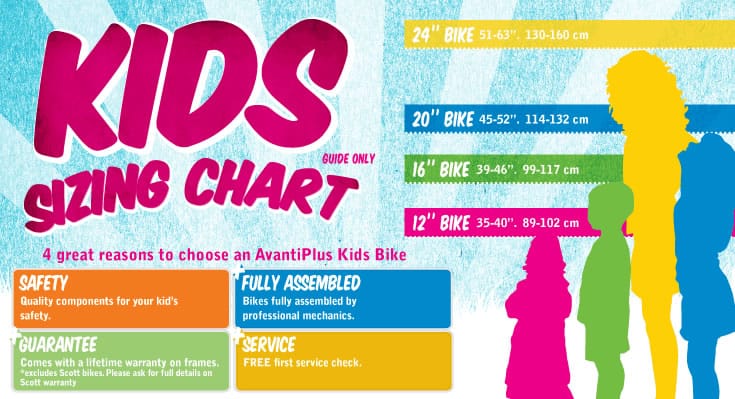
After measuring your child’s inseam, it becomes easier to select the correct balance bike.
Here is a general balance bike size guide:
Balance Bike Size Chart
Swipe left/right to view the full table.
| Child’s Age | Suggested Inseam | Recommended Wheel Size |
|---|---|---|
| 2 to 4 years | 14–17 inches | 12-inch wheels |
| 4 to 6 years | 16–20 inches | 14-inch wheels |
| 6 to 9 years | 20–24 inches | 18-inch wheels |
| 8 to 12 years | 18–22 inches | 16-inch wheels |
| Above 9 years | 24–28 inches | 24-inch wheels |
Age should be used only as a general guide. The most important factor is the child’s inseam. Always compare your child’s inseam with the minimum and maximum seat height of the balance bike.
How to Choose the Right Seat Height
The seat height should match your child’s inseam properly. For beginners, the seat should usually be slightly lower than the inseam measurement.
Best Seat Height Rule
A good rule is:
The minimum seat height should be about 1 inch lower than your child’s inseam.
For example, if your child’s inseam is 15 inches, choose a balance bike with a minimum seat height of around 14 inches.
This helps your child place both feet flat on the ground while sitting.
Why Both Feet Should Touch the Ground
Both feet touching the ground gives the child control. They can push, stop, and balance safely. This is especially important for toddlers who are just learning.
If only the toes touch the ground, the child may feel unstable. For beginners, flat feet are safer and more comfortable.
Adjustable Seat Height Is Better
Children grow quickly. A balance bike with an adjustable seat can be used for a longer time. As your child grows, you can raise the seat gradually.
Avoid bikes with fixed seats unless you are fully sure they match your child’s current size.
Bike Weight Is Also Important
Bike weight is another important factor. A balance bike should be light enough for a toddler to control but strong enough for safe riding.
Why a Heavy Bike Is Not Good
A heavy bike can be difficult for a toddler to push, turn, lift, or stop. If the child struggles with the weight, they may lose interest in riding.
A heavy bike may also increase the risk of falling because the child cannot control it easily.
Why a Very Light Bike May Not Always Be Best
A lightweight bike is usually good, but it should still be durable. If the bike is too light because of poor-quality materials, it may feel unstable or break easily.
The best balance bike should be lightweight, strong, and well-built.
Ideal Balance Bike Weight
A good rule is that the balance bike should not weigh more than about 30% of your child’s body weight.
For example, if your child weighs 30 pounds, a bike around 8 to 9 pounds is usually manageable.
Always check the product description before buying.
Wheel Size Guide for Balance Bikes
Wheel size affects comfort, stability, and riding experience. Most toddler balance bikes come with 12-inch wheels, but other sizes are also available.
12-Inch Wheels
This is the most common size for toddlers. It is usually suitable for children aged 2 to 4 years.
A 12-inch balance bike is easy to control, lightweight, and suitable for beginners.
14-Inch Wheels
A 14-inch bike may be suitable for taller toddlers or children aged 4 to 6 years. It gives more room for growth.
16-Inch Wheels
This size is suitable for older children who still need balance training before moving to a pedal bike.
18-Inch and 24-Inch Wheels
These are usually for bigger children. They are not typical choices for toddlers but may be useful for older kids.
Important Safety Features to Check
Safety should always be the first priority when buying any riding toy. A balance bike should be comfortable, stable, and safe.
Parents should also understand how to select the safe toys for your kid, because safety matters in every toy purchase.
Strong Frame
The frame should be durable and stable. Common materials include steel, aluminum, and wood.
Aluminum frames are lightweight and rust-resistant. Steel frames are strong but may be heavier. Wooden bikes can look stylish but may offer limited adjustability.
Comfortable Seat
The seat should be soft enough for comfort but firm enough for support. An uncomfortable seat may make your child dislike riding.
Safe Handlebar Grips
The handlebar grips should be soft, easy to hold, and designed with rounded ends. This protects the child’s hands during riding or minor falls.
Steering Limiter
Some balance bikes include a steering limiter. This prevents the handlebar from turning too sharply, which may reduce sudden falls.
Footrest
A footrest can help when children learn to glide. However, it should not be too wide because it may disturb leg movement.
Brake System
Very young toddlers usually stop with their feet. However, older children may benefit from a hand brake. A hand brake can help prepare them for a regular bicycle.
Best Helmet and Safety Gear for Balance Bike Riding
Even though balance bikes are safer than many other riding toys, children should always wear protective gear.
A helmet is the most important safety item. Parents can explore the best toddler helmet to protect their child during riding.
Helmet
The helmet should fit properly. It should not move too much when the child shakes their head. It should cover the forehead and sit level on the head.
Knee Pads
Knee pads protect the knees from scratches and minor injuries.
Elbow Pads
Elbow pads are useful for beginners because children often use their arms during falls.
Closed-Toe Shoes
Toddlers should wear closed-toe shoes while riding. Sandals or slippers are not ideal because they do not provide enough protection or grip.
Comfortable Clothing
Avoid long, loose clothing that may get caught while riding. Choose clothes that allow easy movement.
Balance Bike vs Training Wheels
Many parents wonder whether they should buy a balance bike or a bicycle with training wheels.
Training wheels help children stay upright, but they do not teach real balance. Children may become dependent on them.
A balance bike teaches balance first. Once children learn balance, they can usually move to a pedal bike more easily.
Why Balance Bikes Are Often Better
Balance bikes allow children to learn naturally. They can start by walking, then running, then gliding. This step-by-step method makes cycling easier.
Many children who use balance bikes can skip training wheels completely.
When to Move from Balance Bike to Pedal Bike
Your child may be ready for a pedal bike when they can:
- Glide for longer distances
- Turn smoothly
- Stop safely
- Lift their feet while moving
- Show confidence on the balance bike
Parents may also consider free cycling lessons for kids to help children learn proper cycling techniques.
How to Teach Your Child to Ride a Balance Bike
Teaching a toddler to ride a balance bike should be fun, patient, and pressure-free.
Start in a Safe Area
Choose a flat, open, and safe area. A park, driveway, empty playground, or quiet walkway can be a good place.
Avoid busy roads, steep slopes, and crowded areas.
Let the Child Walk First
At first, let your child simply walk while sitting on the bike. They do not need to glide immediately.
This helps them become comfortable with the bike.
Encourage Small Steps
After walking, they may start taking longer steps. Then they may begin to run slowly with the bike.
Eventually, they will lift their feet and glide naturally.
Do Not Force Speed
Some children learn quickly, while others need more time. Do not pressure your child to ride fast or glide before they are ready.
Celebrate Progress
Even small progress matters. If your child sits on the bike, walks with it, or turns the handlebar, encourage them.
Confidence grows through positive support.
Common Mistakes Parents Should Avoid
Many parents make mistakes when buying or using a balance bike. Avoiding these mistakes can make the experience safer and better.
Buying a Bike That Is Too Big
Some parents buy a bigger bike so the child can “grow into it. ” This is risky. If the bike is too big, the child may not control it safely.
Ignoring Inseam Measurement
Age and height are not enough. Inseam measurement is the most important size factor.
Choosing Style Over Safety
A stylish bike may look attractive, but safety, comfort, and fit are more important.
Buying a Heavy Bike
A heavy bike can discourage a toddler from riding. Choose a bike that your child can control easily.
Not Checking Adjustability
A bike with adjustable seat and handlebar height gives better value because it can be used for a longer time.
Balance Bike Maintenance Tips
A balance bike does not require complicated maintenance, but regular checks are important.
Check the Tires
If the bike has air tires, check the air pressure regularly. If the tires are foam, check for damage or wear.
Check the Seat
Make sure the seat is properly tightened and adjusted to the right height.
Check the Handlebar
The handlebar should not be loose. It should turn smoothly and stay secure.
Clean the Bike
Wipe the bike after outdoor use. Remove dirt, mud, or dust from the frame and wheels.
Inspect Before Every Ride
Before your child rides, quickly check the bike for loose parts or damage.
Balance Bike and Other Riding Toys
Balance bikes are excellent for toddlers, but as children grow, they may become interested in other riding toys.
Parents can compare different options, such as best electric scooters or best kids 4 wheeler, depending on the child’s age, skill level, and safety needs.
Balance Bike for Beginners
A balance bike is best for toddlers and early learners because it develops basic balance and coordination.
Scooter for Older Kids
A scooter may be good for children who already have better body control and balance.
4 Wheeler for Supervised Outdoor Fun
A kids’ 4 wheeler may be suitable for older children under proper supervision and with safety gear.
Safety Comes First
No matter which riding toy you choose, always check the recommended age, safety features, product quality, and protective gear requirements.
Buying Checklist for the Best Balance Bike
Before buying a balance bike, use this checklist:
Size and Fit
- Can your child sit comfortably?
- Can both feet touch the ground?
- Does the seat height match the inseam?
- Is the seat adjustable?
Weight and Control
- Is the bike lightweight enough?
- Can your child push and turn it easily?
- Is the frame strong?
Safety
- Does it have safe handlebar grips?
- Is the seat stable?
- Are the tires suitable?
- Is the frame durable?
- Does your child have a helmet?
Long-Term Value
- Is the seat adjustable?
- Is the handlebar adjustable?
- Does the bike have good reviews?
- Is there a warranty or return option?
Frequently Asked Questions About Balance Bikes
What age is best for a balance bike?
Most children can start using a balance bike around 18 months to 2 years old, depending on their height, confidence, and physical ability. However, inseam measurement is more important than age.
How do I know if a balance bike fits my child?
Your child should be able to sit on the seat and place both feet flat on the ground. The seat should not be higher than the child’s inseam.
Is a balance bike safer than a regular bike?
For beginners, a balance bike is often safer because the child controls speed and stopping with their feet. It also avoids pedals and chains.
Does my child need a helmet?
Yes. A helmet is very important for every ride, even if the child is riding slowly.
Are brakes necessary on a balance bike?
For very young toddlers, brakes are not always necessary because they usually stop with their feet. For older children, a hand brake can be helpful.
Can a balance bike replace training wheels?
Yes. Many children who learn on balance bikes move directly to pedal bikes without using training wheels.
What is the best wheel size for toddlers?
For most toddlers, 12-inch wheels are suitable. Taller children may need 14-inch wheels.
Final Thoughts
Choosing the best balance bike for toddlers becomes much easier when parents understand measurement, inseam size, seat height, bike weight, and safety features. A balance bike should not be selected only by color, design, or age recommendation. The most important thing is whether the bike fits your child properly.
A good balance bike should allow your child to sit comfortably, touch the ground with both feet, move confidently, and stop safely. It should be lightweight, adjustable, durable, and easy to control.
Balance bikes are excellent for developing confidence, balance, coordination, and independence. They also encourage outdoor play and help children become ready for regular cycling.
For parents who want a safe and useful outdoor activity for their toddlers, a balance bike is one of the best choices. With the correct size, proper safety gear, and patient guidance, your child can enjoy riding, learning, and growing with confidence.