Is Sous Vide Safe Plastic? Expert Safety Guide and Best Options
Sous vide cooking has become popular because it gives home cooks restaurant-quality control over temperature, texture, and doneness. Instead of cooking food directly over high heat, sous vide uses a precisely heated water bath. Food is usually sealed in a plastic pouch or vacuum bag, then cooked slowly at a controlled temperature.
But one common question remains: is sous vide safe when plastic is involved?
The simple answer is: yes, sous vide cooking can be safe when you use the right food-grade, heat-safe plastic bags and follow proper food safety practices.
The risk is not the sous vide method itself. The real concern is using the wrong type of plastic, cooking at unsafe temperatures, or handling food incorrectly before and after cooking.
This guide explains which plastics are safe for sous vide, which materials to avoid, how to compare sous vide bags, and how to cook safely at home.
Is Sous Vide Plastic Safe?
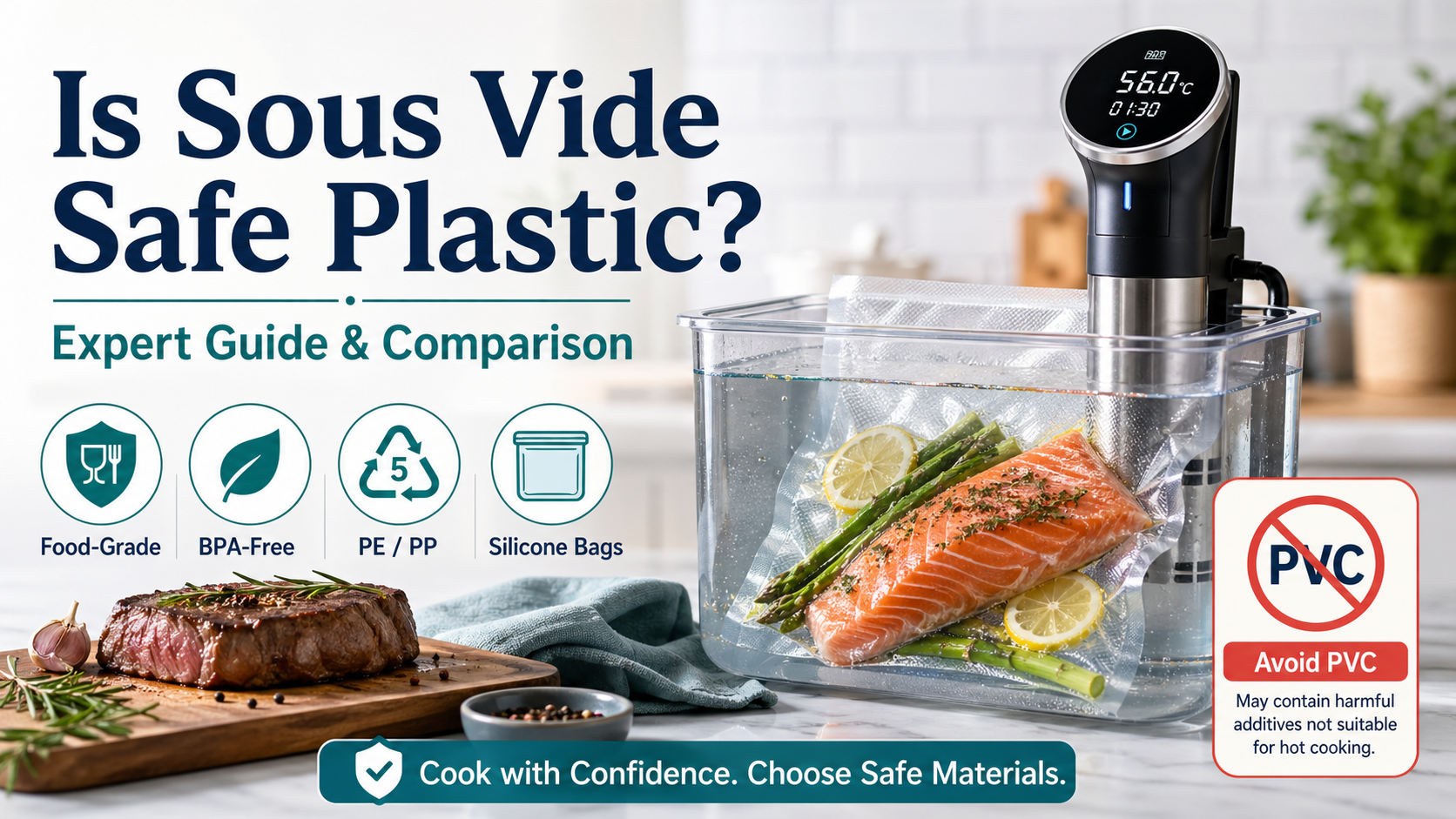
Sous vide plastic is generally safe when the bag is designed for food contact and suitable for heated cooking. The safest options are usually bags made from polyethylene, polypropylene, or food-grade silicone.
These materials are commonly used in food packaging and are generally considered lower-risk choices for sous vide applications when used properly.
Guidance from food safety resources also identifies food-grade polypropylene and polyethylene pouches as lower-risk materials for sous vide cooking. (BC Centre for Disease Control)
The key point is that you should not use just any plastic bag. A regular thin storage bag, grocery bag, trash bag, or unknown plastic pouch should never be used for sous vide. Sous vide bags should be labeled as food-safe, BPA-free, and suitable for cooking or vacuum sealing.
Why Plastic Safety Matters in Sous Vide Cooking
In sous vide cooking, the plastic bag stays in direct contact with food for an extended time. Although sous vide temperatures are usually much lower than frying, roasting, or grilling, the cooking process can last for one hour, several hours, or even longer.
That means the plastic must be stable enough to handle prolonged heat exposure without melting, breaking, leaking, or transferring unwanted chemicals into food.
Plastic safety matters for three main reasons:
First, the bag touches the food directly. Any unsafe material could potentially affect the food.
Second, sous vide often uses long cooking times. Even moderate heat can become a concern if the material is not designed for cooking.
Third, the bag must seal properly. If the seal fails, water can enter the bag, food quality may drop, and food safety can become harder to control.
Best Plastics for Sous Vide Cooking
The best sous vide bags are usually made from the following materials:
1. Polyethylene Bags
Polyethylene is one of the most common plastics used in food packaging. High-density polyethylene and low-density polyethylene are often used for food-safe bags and pouches. These materials are widely used because they are flexible, durable, and generally stable at common sous vide temperatures.
Many freezer-style zip bags and vacuum sealer bags are made with polyethylene-based materials. For sous vide, choose strong freezer-grade bags rather than thin sandwich bags.
2. Polypropylene Bags
Polypropylene is another food-grade plastic commonly used for containers, packaging, and heat-tolerant food applications. It has better heat resistance than some other plastics, which makes it a suitable option for certain sous vide bags and pouches.
Polypropylene and polyethylene are often mentioned together as preferred lower-risk materials for sous vide food pouches.
3. BPA-Free Vacuum Sealer Bags
Vacuum sealer bags are among the most popular choices for sous vide cooking. They remove air from the pouch, improve heat transfer, reduce floating, and keep food sealed tightly during cooking.
When buying vacuum sealer bags, check that they are:
- Food-grade
- BPA-free
- Suitable for sous vide
- Compatible with your vacuum sealer
- Rated for the temperature you plan to use
Vacuum bags are especially useful for meats, fish, poultry, vegetables, and meal prep.
4. Reusable Silicone Bags
Food-grade silicone bags are a good alternative for people who want to reduce single-use plastic waste. They are reusable, flexible, and generally suitable for heated food use when made by a reputable manufacturer.
However, silicone bags have some drawbacks. They can be harder to seal completely, they may float more easily, and they require careful cleaning. If you use silicone bags, inspect them regularly for tears, odor buildup, or damaged seals.
Plastics to Avoid for Sous Vide
Not all plastic is safe for sous vide. Avoid the following materials and products:
PVC Plastic
PVC, or polyvinyl chloride, should not be used for sous vide cooking. PVC may contain additives that are not suitable for heated food contact. If a bag does not clearly state that it is food-grade and safe for cooking, do not use it.
Thin Storage Bags
Thin plastic sandwich bags or cheap storage bags may not be strong enough for sous vide cooking. They can weaken, leak, or split during long cooking sessions.
Grocery Bags or Unknown Plastic Bags
Never use grocery bags, produce bags, trash bags, or packaging from non-food items. These are not designed for cooking and may contain inks, dyes, adhesives, or additives that should not touch heated food.
Damaged or Reused Single-Use Bags
Single-use sous vide bags should not be reused. Once a bag has been heated, sealed, opened, and exposed to food, it may be harder to clean safely. Reusing it can also increase the risk of leaks or contamination.
Sous Vide Bag Comparison
Here is a practical comparison of the most common sous vide bag options:
| Bag Type | Best For | Pros | Cons |
|---|---|---|---|
| Vacuum sealer bags | Meat, fish, poultry, batch cooking | Strong seal, good heat transfer, less floating | Requires vacuum sealer, single-use unless labeled reusable |
| Freezer-grade zip bags | Beginners, short cooks, vegetables | Affordable, easy to find, no machine needed | Can float, seal may weaken at higher temperatures |
| Reusable silicone bags | Eco-conscious cooking, vegetables, meal prep | Reusable, durable, less plastic waste | More expensive, harder to remove air, needs careful cleaning |
| Cheap thin bags | Not recommended | Low cost | Leak risk, unsafe if not cooking-grade |
| PVC or unknown plastic | Never recommended | None for sous vide | Potential chemical and safety concerns |
Is Sous Vide Cooking Safe?
Sous vide cooking is safe when you control time, temperature, and food handling. The biggest food safety risk is not usually the plastic. The bigger risk is allowing harmful bacteria to survive or grow because the food was not cooked, chilled, or stored correctly.
The USDA explains that bacteria grow rapidly in the “danger zone” between 40°F and 140°F. Food should not remain in this range for too long because bacteria such as Salmonella and other pathogens can multiply quickly. (FSIS)
Sous vide often uses lower temperatures than traditional cooking, so you must follow tested time-and-temperature guidelines.
For example, cooking a steak at a lower temperature may still be safe if it is held long enough to pasteurize the food. But guessing is not enough. You need reliable temperature control and proper timing.
How to Choose the Best Sous Vide-Safe Plastic Bags
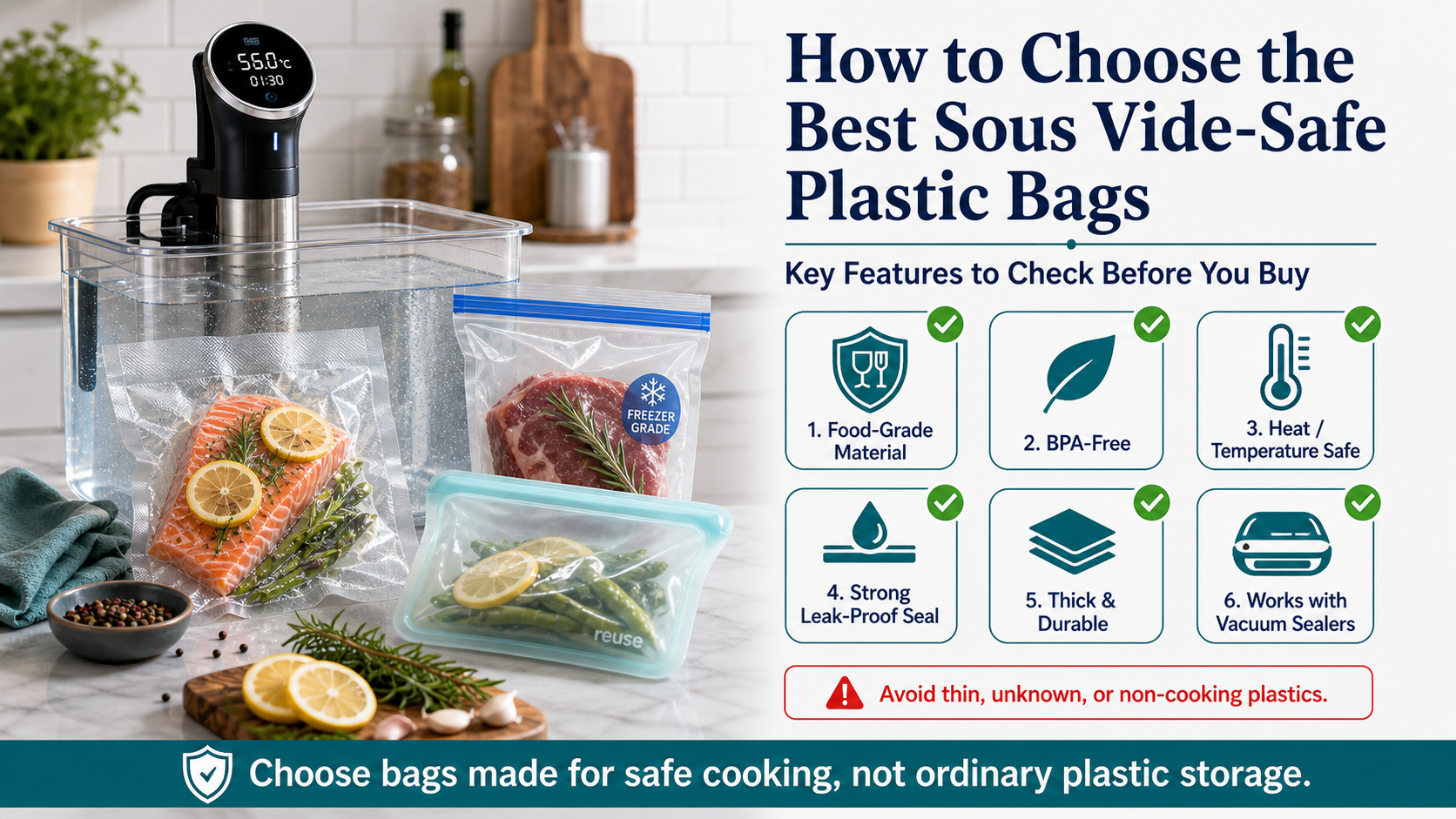
When buying sous vide bags, look for these features:
Food-Grade Labeling
The bag should clearly state that it is food-safe or food-grade. This is the first requirement.
BPA-Free Material
Choose BPA-free bags. BPA is a chemical associated with some plastics, and many consumers prefer to avoid it for heated food contact.
Sous Vide or Cooking-Safe Rating
The best bags will specifically mention sous vide, boil-safe, heat-safe, or vacuum sealing use. Do not rely only on appearance.
Temperature Rating
Check the maximum temperature recommended by the manufacturer. Some bags may be safe at moderate sous vide temperatures but not suitable for very high-heat cooking.
Strong Seal
A weak seal can ruin a cook. Vacuum sealer bags usually provide the best seal. If using zip bags, choose freezer-grade bags and use the water displacement method carefully.
Thickness and Durability
Thicker bags are less likely to tear or leak. This is especially important when cooking bone-in meat, sharp-edged foods, or long-duration recipes.
Common Sous Vide Plastic Mistakes
Many sous vide safety problems come from avoidable mistakes. Here are the most important ones to avoid:
Using the Wrong Bag
Do not use plastic unless it is food-grade and heat-safe. Unknown plastic is not worth the risk.
Cooking Too Hot for the Bag
Some bags may fail at higher temperatures. Always check the manufacturer’s instructions before cooking vegetables or other foods that require higher heat.
Letting the Bag Float
Floating bags may cook unevenly because part of the food is not fully surrounded by hot water. Remove as much air as possible and use clips, racks, or weights if needed.
Reusing Disposable Bags
Disposable bags should be discarded after use. Reusing them can create hygiene and durability issues.
Ignoring Food Safety Times
Sous vide is precise, but it is not magic. You still need to cook food long enough at the correct temperature.
Expert Tips for Safer Sous Vide Cooking
Use a reliable sous vide machine that can maintain a stable temperature. Temperature accuracy is essential because a few degrees can matter when cooking at lower temperatures.
Start with fresh ingredients. Sous vide can improve texture and flavor, but it cannot make spoiled food safe.
Keep raw and cooked foods separate. Wash hands, cutting boards, knives, and surfaces after contact with raw meat, poultry, or seafood.
Chill food quickly if you are not eating it immediately. Use an ice bath before refrigerating cooked sous vide food. This helps move food out of the danger zone faster.
Do not store vacuum-sealed cooked food at room temperature. Vacuum packaging can reduce oxygen, but it does not eliminate all food safety risks.
Cost and Value: Which Option Is Best?
For beginners, BPA-free vacuum sealer bags or freezer-grade zip bags labeled for cooking use are usually the best starting point. They are affordable, easy to use, and widely available.
For frequent sous vide users, a vacuum sealer may be worth the investment. It gives better sealing, improves storage, and reduces floating issues.
For eco-conscious cooks, reusable silicone bags can provide long-term value. They cost more upfront but reduce disposable plastic waste. The tradeoff is that they require more cleaning and may not remove air as efficiently as vacuum bags.

Final Recommendation
So, is sous vide safe plastic? Yes, it can be safe when you choose the right material and follow proper cooking guidelines.
The best option for most home cooks is a food-grade, BPA-free sous vide bag made from polyethylene or polypropylene. Vacuum sealer bags are the most reliable choice for consistent results. Reusable silicone bags are also a strong option if you want a more sustainable solution.
Avoid PVC, thin plastic bags, grocery bags, unknown plastics, and any bag that is not clearly labeled for food and heat use.
Sous vide cooking is not only safe when done correctly, but it can also be one of the most precise and enjoyable cooking methods for home kitchens.
FAQs
What is sous vide-safe plastic?
Sous vide-safe plastic is food-grade plastic designed to handle controlled cooking temperatures in a water bath. Common safe materials include polyethylene and polypropylene.
Can I use regular zip bags for sous vide?
You may use strong freezer-grade zip bags if they are food-safe and suitable for the cooking temperature. However, vacuum sealer bags are usually more reliable.
Is BPA-free plastic enough for sous vide?
BPA-free is important, but it is not the only factor. The bag should also be food-grade, heat-safe, durable, and suitable for sous vide or cooking.
Are silicone bags better than plastic bags?
Silicone bags are reusable and more eco-friendly, but they can be harder to seal and clean. Plastic vacuum bags are often easier and more consistent for beginners.
What plastic should I avoid for sous vide?
Avoid PVC, thin storage bags, grocery bags, trash bags, and any plastic that is not labeled as food-safe and heat-safe.
Is sous vide safer than traditional cooking?
Sous vide can be very safe because it uses precise temperature control. However, it requires correct cooking times, proper chilling, and safe food handling.
What is the best sous vide bag for beginners?
The best beginner option is a BPA-free vacuum sealer bag or a high-quality freezer-grade zip bag designed for food use and suitable temperatures.
See also: