If you pump on a work schedule, you already know the problem. You get a fixed break window, sometimes only 15 or 20 minutes. You might be pumping at a desk, in a parked car, or in a lactation room down the hall, with a meeting waiting after. A pump for that life needs to be fast to set up, quiet enough for a shared space, and easy to clean and carry. It also has to be comfortable, because a pump that hurts or leaves milk behind costs you time you don’t have. This guide to the Best Electric Breast Pumps for Working Moms is built around those constraints.
I’m Karl D. McGrath, and I want to be upfront about how this list was made. I have not personally tested these pumps, and I’m not claiming hands-on results. Everything here comes from research: manufacturer specifications, published product information, and the feedback owners have shared.
I’ve picked seven pumps that cover the main needs of a working mom. They include a best overall closed-system pump, a budget-friendly plug-in model, a rechargeable option for commuters, a classic bag-ready pump, and three wearable hands-free choices. Pump models, kits and what’s in the box change often, so confirm the details on the Amazon listing before you buy.
Two caveats matter. First, wearable pumps are convenient, but for some moms they are less powerful or less efficient than a traditional double pump, and results vary from person to person. Many moms use a wearable for convenience and keep a traditional pump as a backup. Second, many US health plans cover a breast pump under the Affordable Care Act.
Before you spend your own money, check your plan and its approved supplier, since the covered models, and sometimes the upgrade options, differ by plan. This article is general information, not medical advice. If you have pain, a low or dropping milk supply, or trouble with flange fit, talk to an IBCLC lactation consultant or your healthcare provider.
Our top picks
- Best overall for commuting and pumping away from an outlet: Spectra S1 Plus Premier Rechargeable Breast Pump
- Best value for moms who pump at a desk near an outlet: Spectra S2 Plus Electric Breast Pump
- Best traditional bag-style pump for daily workplace use: Medela Pump In Style with MaxFlow Breast Pump
- Best for a hands-free pump with a rechargeable motor: Medela Freestyle Hands-free Breast Pump
- Best budget-friendly wearable for discreet pumping at work: Momcozy S12 Pro Hands-Free Breast Pump
- Best for spill-conscious pumping with disposable milk bags: Willow Go Wearable Breast Pump
- Best lightweight, affordable double pump with a rechargeable battery: Motif Medical Luna Double Electric Breast Pump
Comparison chart
| Product | Best for | Power / portability | Pump type | Warranty (check Amazon listing) |
|---|---|---|---|---|
| Spectra S1 Plus Premier Rechargeable Breast Pump | Commuting and pumping away from an outlet | Built-in rechargeable battery plus wall power | Traditional double electric, closed system | Check the Amazon listing or manufacturer |
| Spectra S2 Plus Electric Breast Pump | Desk pumping near an outlet on a budget | Wall power; needs an outlet | Traditional double electric, closed system | Check the Amazon listing or manufacturer |
| Medela Pump In Style with MaxFlow Breast Pump | Daily workplace use with a bag-ready pump | Wall power; some versions offer a battery pack, so check the listing | Traditional double electric, closed system | Check the Amazon listing or manufacturer |
| Medela Freestyle Hands-free Breast Pump | Hands-free pumping with a rechargeable motor | Rechargeable motor that clips on a belt or fits in a pocket | Hands-free system with a separate motor | Check the Amazon listing or manufacturer |
| Momcozy S12 Pro Hands-Free Breast Pump | Discreet, budget-friendly wearable pumping | Rechargeable; worn inside the bra | Wearable, all-in-one | Check the Amazon listing or manufacturer |
| Willow Go Wearable Breast Pump | Spill-conscious pumping with milk bags | Rechargeable; worn inside the bra; app-connected | Wearable, all-in-one | Check the Amazon listing or manufacturer |
| Motif Medical Luna Double Electric Breast Pump | A lightweight, affordable double pump with a battery | Rechargeable battery; compact for travel | Traditional double electric, closed system | Check the Amazon listing or manufacturer |
A quick note on reading the chart: I’ve left the warranty column as a pointer on purpose. Terms can vary by seller, kit and region, and I won’t guess at them. Also check which parts come in the box, especially flange sizes, since fit matters as much as the pump itself.
Top pick: Best overall for commuting and pumping away from an outlet: Spectra S1 Plus Premier Rechargeable Breast Pump

Key Features
- Double electric pump with a built-in rechargeable battery, so you can pump without an outlet
- Closed-system design with a backflow barrier to keep milk out of the tubing and motor
- Adjustable suction and cycle speed, with massage and expression modes
- Backlit display and night light
- Works with a wide range of Spectra and third-party flanges and accessories, so check your flange size
The S1 Plus is the pump I would start with for most working moms, because the battery removes the biggest scheduling headache: needing a wall outlet at the exact moment your break begins. You can pump in a parked car, a conference room with no free sockets, or a lactation room where the outlets are taken. Because it is a closed system, milk is not supposed to reach the tubing or motor, which makes cleanup after a short break simpler.
The adjustable suction and cycle speed are the other reason it suits a work schedule. You can start in massage mode to trigger let-down, then switch to expression mode and tune the settings to what is comfortable. I am writing from manufacturer information and owner feedback, not hands-on testing, so how well it empties your breasts depends on fit and your body. Results vary from mom to mom.
What we liked
- The rechargeable battery gives real freedom on commutes, trips and in crowded pumping rooms
- Closed system with a backflow barrier for a more hygienic milk path
- Flexible settings, with separate massage and expression modes
- Large accessory ecosystem, so replacement parts are easy to find
What we did not like
- The motor is larger and heavier than the most compact pumps, so it takes more bag space
- You still need to carry flanges, bottles and tubing, unlike a wearable
- Battery run time depends on your settings, so confirm details on the listing and charge it before long days
- Included flange sizes may not fit you, and you may need to buy others separately
Why we picked it
It combines a closed system, flexible settings and a rechargeable battery in one traditional double pump with plenty of available parts. If your day involves moving between locations, it is the most versatile pick in this guide. Check the listing for warranty details, as I will not guess at terms.
Best value for moms who pump at a desk near an outlet: Spectra S2 Plus Electric Breast Pump

Key Features
- Double electric pump that runs on wall power
- Closed-system design for a hygienic milk path
- Adjustable suction and cycle speed with massage and expression modes
- Quiet operation, as described by many owners
- Same flange and accessory ecosystem as the S1 Plus, so replacement parts are easy to find
The S2 Plus is essentially the S1 Plus without the battery. If you pump in the same private office or lactation room every day and there is an outlet within reach, you give up little by skipping the rechargeable model. You get the same core approach: a closed system, two modes and adjustable suction and speed. Many owners describe it as quiet, which matters in a shared workspace or when you are on a call between meetings.
The trade-off is that you are tied to the wall. A short cord or a crowded pumping room can make that annoying, and you cannot pump in the car without an adapter or power source. If your schedule is unpredictable, spend a little more on the S1 Plus. If your routine is fixed, the S2 Plus is a sensible way to put your money into extra flanges, bottles and storage instead.
What we liked
- Closed system with adjustable settings at a lower price point than battery models
- Owners often describe it as quiet
- Shares parts with the S1 Plus, so spares and flange sizes are easy to find
- Good fit for a fixed daily pumping spot
What we did not like
- No built-in battery, so you need an outlet
- Less flexible for commuters and travelers
- Still a bag-and-tubing setup, not hands-free
- Check the listing for what is in the box and for warranty terms
Why we picked it
For a moms with a regular desk or office pumping routine, it gives you the closed-system essentials and flexible settings without paying for a battery you may never use.
Best traditional bag-style pump for daily workplace use: Medela Pump In Style with MaxFlow Breast Pump

Key Features
- Double electric pump with Medela’s 2-Phase Expression technology
- Closed system with MaxFlow technology to protect the motor
- Compact motor, usually sold with a carrying bag or tote
- Runs on wall power, and some versions have a battery pack option, so check the listing
- Medela PersonalFit flanges and widely available replacement parts
The Pump In Style is the classic work pump for a reason. The motor and parts are made to travel in a bag, and the tote format keeps flanges, bottles and tubing together, which helps when you have only a short window to set up and pack down. The 2-Phase Expression technology starts with quicker, lighter suction to stimulate let-down and then moves to slower, stronger expression, which many moms find a natural rhythm.
Medela’s parts are easy to find in stores and online, which is useful when valves and membranes need replacing. Configurations differ between listings, including the bag, the battery pack option and the flange sizes included, so read the Amazon listing carefully before you order. Medela also sells PersonalFit flanges in several sizes, and a poor fit is a common reason for discomfort and low output, so measure and choose accordingly.
What we liked
- Bag-ready design built for daily carrying
- Closed system with 2-Phase Expression technology
- Replacement parts and accessories are widely available
- Familiar and well known, so advice from other moms and lactation consultants is easy to find
What we did not like
- Wall power by default, so you may need an outlet or a battery pack where offered
- Not hands-free, so you cannot type or move around much while pumping
- Included flange size may not suit you
- Check the listing for warranty details, since versions vary
Why we picked it
If you want a proven, bag-style pump with strong parts availability and a rhythm many moms like, this is a dependable daily workplace choice.
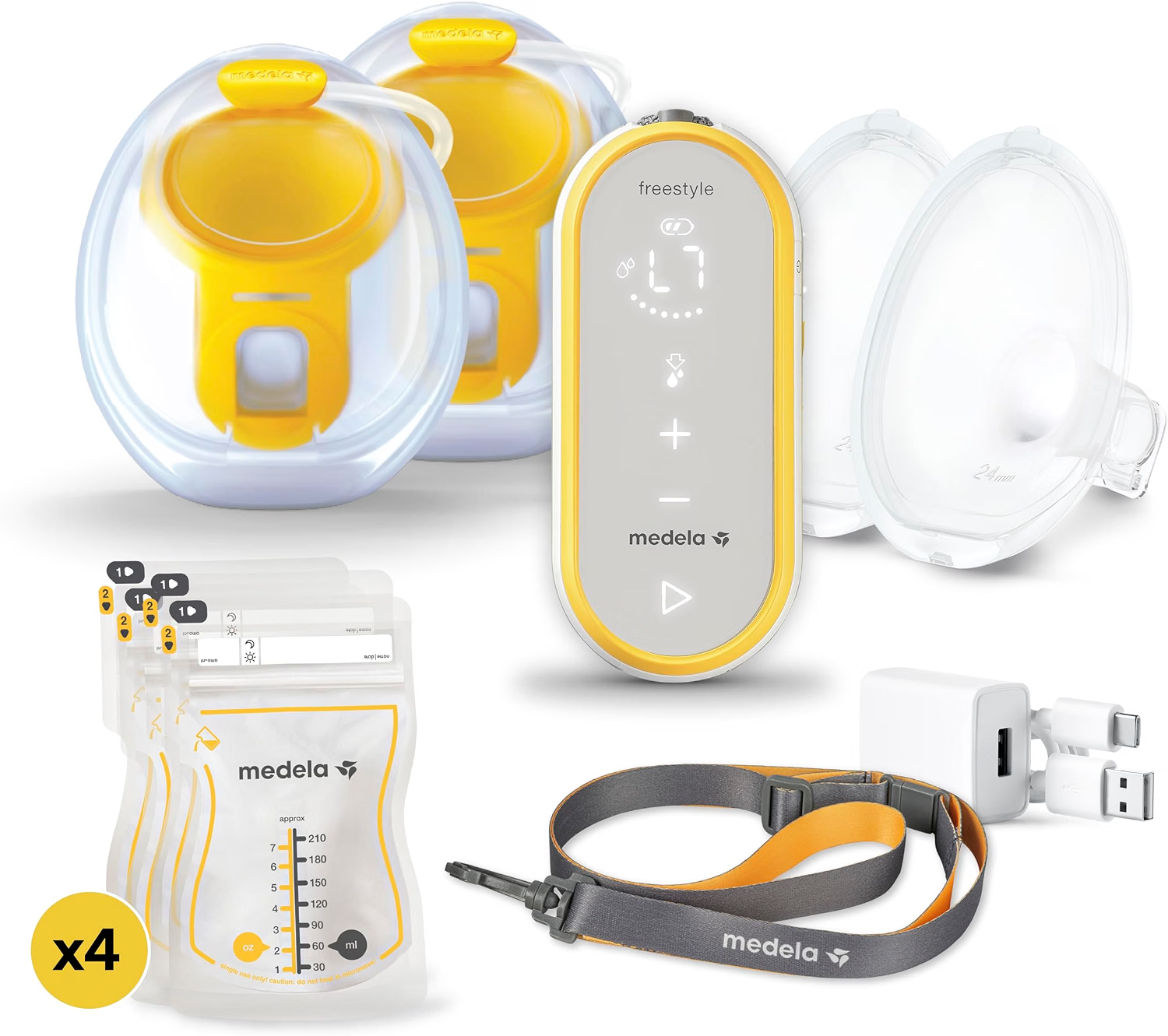
Best for moms who want a hands-free pump with a rechargeable motor: Medela Freestyle Hands-free Breast Pump
Key Features
- Rechargeable, portable motor that clips on a belt or sits in a pocket
- Hands-free collection containers that fit inside a nursing or pumping bra
- Uses Medela 2-Phase Expression technology
- Digital display and adjustable settings
- Compatible with Medela parts, so check the listing for what is in the box
The Freestyle Hands-free sits between a traditional pump and the all-in-one wearables. The collection containers go inside your bra, but the motor is a separate unit that clips to a waistband or sits in a pocket. That means the cups can be a little smaller and lighter than some self-contained wearables. The trade-off is a motor and tubing to manage while you move around.
For a working mom, the appeal is answering email, joining a call or eating lunch with both hands free, and the rechargeable motor means you are not tied to an outlet. Medela’s parts are also easy to find. As with any wearable, results vary. Some moms get output close to a traditional pump, and others find they need to switch back to one. I am writing from specs and owner feedback, not hands-on testing, so confirm what is included and the warranty on the Amazon listing or with Medela.
What we liked
- Rechargeable motor frees you from the wall outlet
- Separate motor keeps the in-bra containers less bulky than some all-in-one designs
- Familiar Medela technology and widely available replacement parts
What we did not like
- You still have a motor and tubing to clip or carry
- Wearables may be less efficient than a traditional pump for some moms
- Box contents can vary by listing, so check before you buy
Why we picked it
I picked it for moms who want hands-free pumping from a well-known brand and who like having the motor off the breast. It suits desk workers and people who move between meetings. Skip it if you want a completely self-contained wearable with no tubing.
Best budget-friendly wearable for discreet pumping at work: Momcozy S12 Pro Hands-Free Breast Pump
Key Features
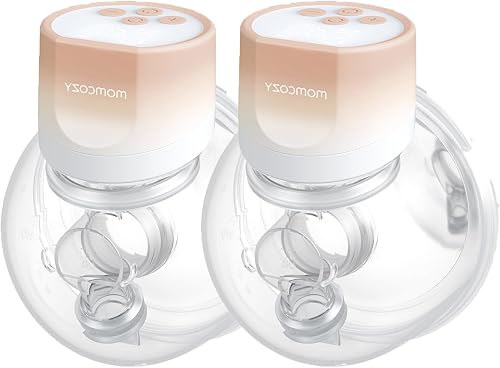
- Wearable, hands-free pump you wear inside a bra
- Rechargeable battery with multiple modes and suction levels
- Fits under clothing, but some moms may notice bulk
- Usually sold as a single pump or a double set, so check the listing
- Simple parts for cleaning and reassembly
The Momcozy S12 Pro is an all-in-one wearable, so the motor and collection cup sit together inside your bra with no tubing. That makes it practical for moms who pump in a car, a shared room or at a desk and do not want to be seated near a wall outlet or a cord. Wearables are generally priced below the premium options, which is why I count this one as budget-friendly. Check the current price on Amazon yourself.
Owners should expect a learning curve. Placement inside the bra, flange fit and a supportive, snug bra all affect comfort and output, and the cups can show under fitted tops. Some moms find wearables work well for a mid-day session, while others keep a traditional pump for their main sessions. Check whether the listing is for one pump or two, and confirm warranty terms with the seller or manufacturer.
What we liked
- No tubing, which makes it easy to pump while moving or on a commute
- Rechargeable, with adjustable modes and suction levels
- Few parts, so cleanup between meetings is manageable
What we did not like
- Can look bulky under fitted clothing
- Output and comfort vary, and wearables may be less efficient for some moms
- Single and double sets are sold separately, which is easy to miss
Why we picked it
I chose it as an accessible way to try hands-free pumping without paying for a premium wearable. It makes the most sense as a second pump for work or travel. If you rely on it as your only pump, watch your output and comfort closely, and talk to a lactation consultant if something seems off.
Best for spill-conscious pumping with disposable milk bags: Willow Go Wearable Breast Pump

Key Features
- Wearable, hands-free pump that is quiet and portable
- Often used with Willow’s leak-proof milk bags, which can be convenient for pumping on the move
- Rechargeable and app-connected, with milk tracking
- Moms can pump into a bag without handling bottles
- Ongoing bag costs may add up
The Willow Go is built around pumping into a sealed bag rather than a bottle. If you pump in a car, on a train or in a room where you would rather not pour milk, that is the main draw. The pump is wearable and rechargeable, and an app lets you track sessions and milk. The bag system also means fewer pieces to wash, though you will still clean the parts that touch milk.
The honest downside is cost and fit. Milk bags are a recurring expense that can add up if you pump several times a day at work, so budget for them beyond the pump itself. Willow’s own bags are the intended system, so check what the listing includes. Like other wearables, it may not match a traditional pump for every mom, and output varies. I have not tested it myself and am relying on manufacturer information and owner feedback. Check the Amazon listing or Willow for warranty details.
What we liked
- Leak-conscious bag design is handy for pumping on the move
- Quiet, portable and rechargeable
- App tracking is useful if you like to log sessions
What we did not like
- Ongoing cost of milk bags
- Works best within Willow’s own system, so you are tied to their bags
- Wearables can be less efficient for some moms, and results vary
Why we picked it
I picked it for moms who value cleanliness and convenience over the lowest running cost, such as commuters, travelers and anyone who pumps away from a sink. If you pump many times a day and watch your budget, a traditional pump or a cheaper wearable will likely cost less over time.
Best lightweight, affordable double pump with a rechargeable battery: Motif Medical Luna Double Electric Breast Pump
Key Features
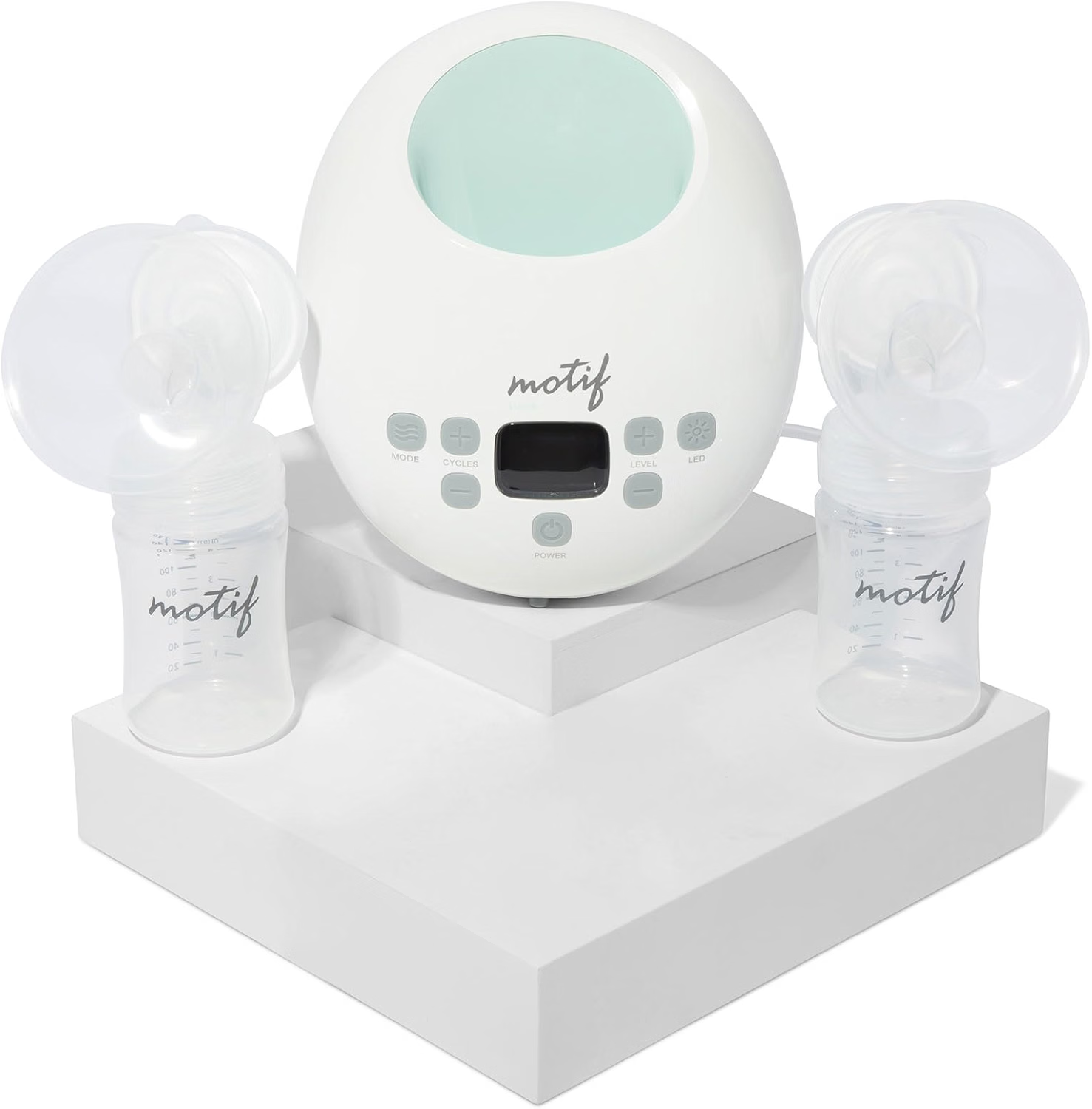
- Double electric pump with a rechargeable battery and a compact design
- Closed-system design that helps prevent milk from reaching the tubing
- Adjustable suction and cycle speed, with massage and expression modes
- Backlit display and a lightweight motor that is easy to pack for travel
- Works with common flange sizes and accessories, so check fit before you buy
The Motif Luna is the pump I would look at first if you want the freedom of a battery without moving to a wearable. It is a traditional double electric pump. The motor sits on a desk, in a bag or on your lap, and the milk collects in bottles attached to standard flanges. Many working moms prefer that layout because it is familiar, and it avoids the questions some people have about how well wearables perform. The Luna’s selling point is that it combines this format with a small, light motor and a rechargeable battery, and it has generally been positioned as a more affordable option than some better-known rechargeable pumps. Check the current price on the listing, since prices change.
On a workday, the battery matters most when your pumping spot is not ideal. Maybe the lactation room has one outlet and a line for it. Maybe you pump in a parked car before a meeting, or the outlet at your desk is behind a filing cabinet. A rechargeable motor lets you pump anywhere and plug in when an outlet is available. It also helps on business trips, in airports and on the road. The closed-system design is also worth noting. It is meant to keep milk out of the tubing and motor, which makes cleaning simpler and is a meaningful hygiene point when you are washing parts in a break-room sink.
The Luna offers the controls most working moms want: adjustable suction and cycle speed, plus massage and expression modes. You can start with a quick stimulation phase to trigger letdown and then settle at a level that is comfortable and productive for you. The backlit display is useful in a dim room or a car. I am writing this from manufacturer information and owner feedback, not hands-on testing, so I cannot give you a verdict on noise, battery life or suction in practice. Read recent owner reviews for those details, especially if you pump in a shared office. Results vary from person to person, and a pump that works well for one mom may not suit another.
Fit is the other thing to confirm. The Luna works with common flange sizes and accessories, but flange size is the single biggest factor in comfort and output, and it differs for everyone. Check what size comes in the box, and compare it against your own measurements before you decide the pump is the problem. Also check whether the listing includes extra valves, membranes, bottles or a carrying bag, because bundles differ. For warranty terms, check the Amazon listing or Motif’s website. I would rather you confirm the current terms than rely on my summary.
What we liked
- A rechargeable battery gives you flexibility when outlets are scarce or you are on the move.
- The compact, lightweight motor suits a work bag, a commute or a trip.
- The closed-system design is meant to protect the tubing and motor from milk.
- Massage and expression modes with adjustable suction and cycle cover what most moms need.
- The backlit display is handy in dim lactation rooms or in a car.
- It is a traditional double pump, so there is no learning curve with wearable cups or milk bags.
What we did not like
- It has fewer long-term owner reports and a smaller accessory ecosystem than the Spectra and Medela lines, so replacement parts may take more effort to source.
- Battery life varies with settings and age, and I will not quote a figure I cannot back up, so check the manufacturer’s specifications and recent reviews.
- It is not hands-free. You still hold the bottles or use a bra to keep the flanges in place, so it will not let you type or take calls as easily as a wearable would.
- The flanges in the box may not be your size, and you may need to buy different ones.
- Warranty terms are not something I can confirm here, so check the listing before buying.
Why we picked it
I picked the Motif Luna for moms who want a light, portable double pump with a rechargeable battery without paying for the most established names. It is a sensible middle path between a wall-powered pump like the Spectra S2 Plus and a wearable pump. You get the familiar bottle-and-flange setup, a closed system and the ability to pump away from an outlet. Pick it if you commute, travel or share a cramped pumping space. Skip it if you need hands-free pumping at your desk, in which case look at the wearables above, or if you want the widest choice of replacement parts from third-party sellers. Whichever pump you choose, check your insurance coverage first, because many US plans cover a pump under the ACA. If pumping hurts, your output drops or the fit feels wrong, talk to a lactation consultant rather than guessing. This is general information, not medical advice.
How to Choose the Best Electric Breast Pumps for Working Moms
This guide is based on research: manufacturer specs, published product information and owner feedback. It is not hands-on testing. It is also general information, not medical advice. If pumping hurts, your supply drops or the fit feels wrong, talk to a lactation consultant or your healthcare provider.
Wall-power vs rechargeable battery: what fits your workday
If you have a private office or a lactation room with an outlet, wall power is simple and you never worry about charge. If you commute, travel, or work somewhere without a dedicated room, a rechargeable battery gives you flexibility. Charge the pump overnight and keep the charger in your bag in case a day runs long.
Traditional double pump vs wearable hands-free pump
A traditional pump with tubing and bottles is usually the more dependable choice for building and maintaining output. A wearable pump lets you keep working, take calls or stay discreet. Wearables can be less powerful or less efficient for some moms, and results vary a lot from person to person. Many working moms keep a traditional pump as their main option and use a wearable for busy days.
Closed vs open system and why hygiene matters
A closed system has a barrier meant to keep milk out of the tubing and motor, which lowers the chance of moisture and mold in parts you can’t easily clean. It also means fewer pieces to wash. Open systems can work, but you need to inspect the tubing and follow the manufacturer’s instructions closely. For shared workplaces and short breaks, I’d lean toward a closed system.
Flange size and fit: the factor that decides comfort and output
Fit affects comfort and how well you empty. The usual approach is to measure the nipple’s diameter, not the areola, and compare it with the manufacturer’s sizing chart. Some brands suggest sizing up slightly. Your nipple should move freely in the tunnel without rubbing, with little areola pulled in. Sizes can change over time, and the two sides can differ. If you’re unsure, a lactation consultant can check the fit.
Suction strength, cycle speed and expression modes
Look for adjustable suction and cycle speed, plus a massage (stimulation) mode and an expression mode. Higher suction is not better. The right level is the strongest setting that stays comfortable. Settings you can change with one hand, or a display you can read in dim light, help when you only have a short break.
Noise level for shared offices and lactation rooms
Motor noise varies between models and is hard to compare in the abstract. Owners often describe wearables and some compact pumps as quieter, but a traditional pump can also sound fine behind a closed door. If you share a room or pump in a car or open office, read owner feedback about sound before buying. Check what the listing says about how loud a pump runs.
Portability, bags and pumping on commutes or business trips
Weight, motor size and what the pump comes with matter more than you’d think. A bag-ready pump saves you from packing a tote of loose parts. For travel, pack spare parts, a charger, a cooler bag with ice packs and a way to label milk. Most of us pump in the car only when parked, so a battery pump or a car adapter (check compatibility first) is worth considering. Never pump while driving.
Cleaning and parts: how many pieces you will wash between meetings
Count the pieces that touch milk. More parts mean more time at the sink. Wearables can have a lot of small parts, while a simple traditional kit can be quicker to rinse and reassemble. Many working moms buy a second set of parts so they can swap in clean ones for the afternoon session and wash everything at home. Follow the manufacturer’s cleaning instructions, and don’t treat quick wipes as a replacement for proper washing.
Insurance coverage, HSA/FSA use and replacement parts
Many US health plans cover a breast pump under the Affordable Care Act, but coverage details vary by plan and supplier. Call your insurer or check its website before buying, since some require you to go through a specific supplier or choose from certain models. Breast pumps and supplies are generally eligible expenses for HSA and FSA accounts, but confirm with your plan administrator. Before you buy, make sure replacement valves, membranes, flanges and tubing are easy to find for that model.
Budget and ongoing costs such as flanges, valves and milk bags
The sticker price is only part of the cost. Valves, membranes, tubing and extra flanges wear out and need replacing. Wearables that use disposable bags add a running cost. A pump covered by insurance may still need extra accessories out of pocket. A modest, well-supported pump often costs less over time than a cheaper one with hard-to-find parts.
Frequently Asked Questions
Are insurance companies required to cover a breast pump?
Under the ACA, most private health plans must cover breastfeeding support and supplies, which generally includes a breast pump. The details, such as which models, whether it is a rental or purchase, and which supplier, depend on your plan. Check with your insurer first. Some plans exempt certain categories, so don’t assume.
How often should I pump at work?
A common approach is to pump about as often as your baby would feed, which for many moms is every three to four hours during the workday. Sessions often run about 15 to 20 minutes, but this varies. A lactation consultant can help tailor a schedule to your baby’s age and your supply.
Is a wearable pump as effective as a traditional pump?
It depends on the mom. Some get good output from wearables, while others find them less efficient or less powerful than a traditional pump. Fit and flange size play a big part. If you try a wearable and your output drops, a traditional pump is a sensible fallback.
Can I pump in my car on my commute?
Yes, if you are parked. A battery-powered pump, like the Spectra S1 Plus Premier Rechargeable Breast Pump, makes this easier. Use a cover or nursing wrap for privacy, and never pump while driving.
How do I know which flange size to use?
Measure your nipple’s diameter and compare it with the manufacturer’s sizing chart. Your nipple should move freely without rubbing the tunnel, with minimal areola drawn in. If pumping hurts or you aren’t emptying well, ask a lactation consultant to check the fit.
How often should I replace valves, membranes and tubing?
Follow the schedule in your pump’s manual, since it differs by brand and how often you pump. Replace parts sooner if they are torn, warped, cloudy or if suction seems weaker. Replace tubing if you see moisture or mold inside.
How do I store pumped milk at work?
Use clean, labeled containers or milk storage bags. CDC guidance says freshly expressed milk can stay at room temperature for up to four hours, in the refrigerator for up to four days, and in an insulated cooler with ice packs for up to 24 hours. Check the current CDC guidance, and ask your pediatrician if your baby has special needs.
Is a hospital-grade pump necessary for a working mom?
Most working moms don’t need one. A quality personal double electric pump is designed for regular use. A hospital-grade pump may help in specific situations, such as a premature baby or establishing supply, so ask a lactation consultant if you’re unsure.
What should I do if pumping hurts or my supply drops?
Pumping shouldn’t be painful. Lower the suction, check the flange size and check the condition of your valves and membranes. If pain, damaged skin or low output continues, contact a lactation consultant or healthcare provider. Stress, schedule changes and illness can also affect supply.
How do I keep pump parts clean when I only have a short break?
Bring a spare set of parts so you can swap in clean ones. Rinse milk-contact parts promptly and wash them according to the manufacturer’s instructions as soon as you can. Keep a small wash basin and bottle brush at work if you have a sink. Quick wipes help in a pinch but don’t replace proper washing.
Final thoughts
If you need one pump that works at a desk, in a car and on a business trip, the Spectra S1 Plus Premier Rechargeable Breast Pump is my top pick. It pairs a closed system with a built-in rechargeable battery and adjustable settings. If you pump near an outlet and want to spend less, the Spectra S2 Plus Electric Breast Pump is my best value pick, with the same closed-system design and the same parts ecosystem.
Whatever you choose, check your insurance first, get your flange size right and keep a spare set of parts. If something doesn’t feel right, a lactation consultant is the best person to ask.