I’m Karl D. McGrath, and I write Ready for Ten from Thomasville, Georgia. The question I hear most from people curious about wire wrapping and beading is whether they should spend real money on tools before they know the hobby will stick. A jewelry making kit for beginners under $30 is the cheapest way to find out. I
t costs less than a decent single pair of pliers, and it lets you learn what you enjoy before you commit to better gear. It also works as a gift when you don’t know what tools the person already owns.
It helps to know what you’re getting. A cheap kit usually bundles a small plier set, a few spools of thin craft wire, beads, findings such as jump rings, clasps and earring hooks, and sometimes a jig or a printed booklet. The weak spots are predictable. The pliers tend to be soft, with rough or poorly aligned jaws. The cutters may crush hard wire instead of snipping it cleanly.
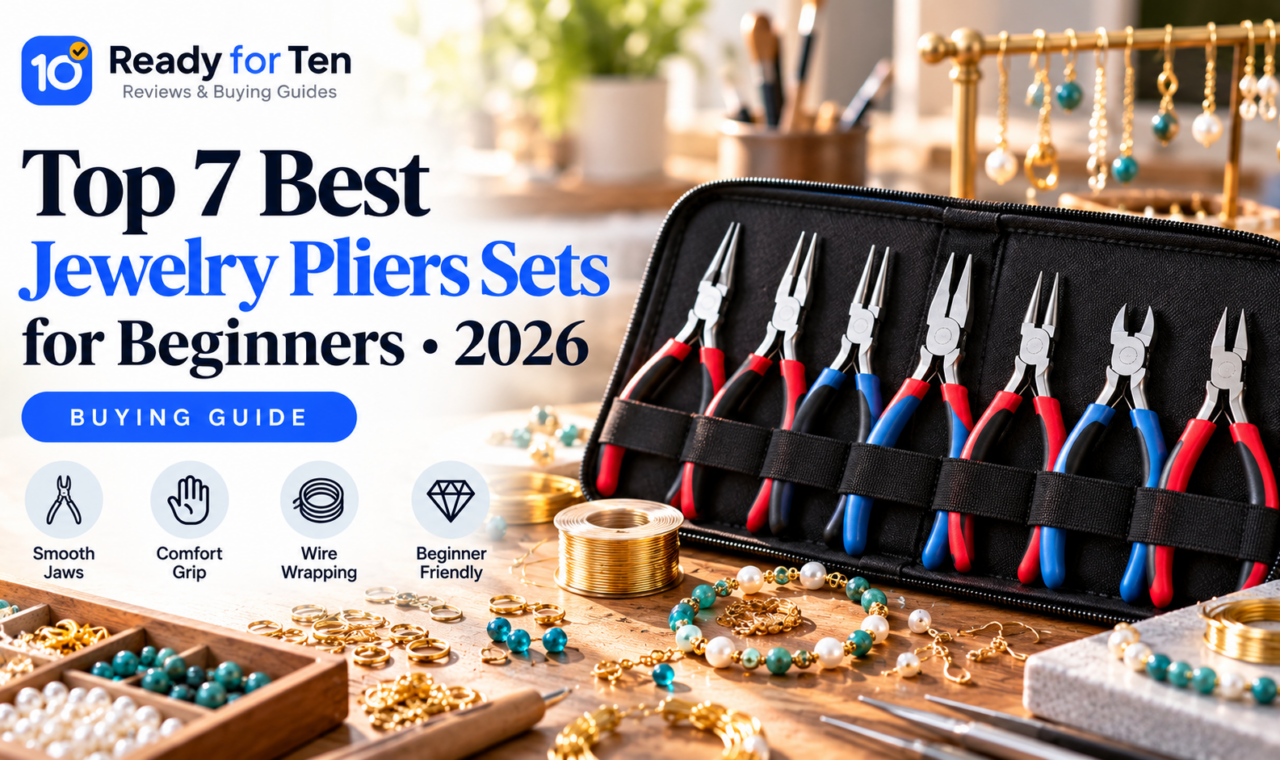
The wire is often too thin, or too hard or too soft, for a project that has to hold its shape. Treat a kit as a trial run, not a toolbox for life. When you start noticing the limits, the next step is better pliers, and our Top 7 Best Jewelry Pliers Sets for Beginners guide covers that upgrade.
I chose these six by looking at listing specs, manufacturer information and what owners say about them. I have not tested them hands-on, so I won’t claim to have. I also won’t quote prices, star ratings or piece counts, because Amazon listings change often and a number that was right last month may not be now. Contents vary by listing and seller, so check what’s actually in the box before you buy. E
very pick is a product normally sold at the budget end of its category, and every section says what you give up at this price. Two of the six, the Mandala Crafts wire and the Caydo pliers, are not full kits. I included them because they solve the two most common problems with cheap kits: poor practice wire and poor tools.
Our top picks
- Best all-round starter: Paxcoo Jewelry Making Supplies Kit
- Best for repairs and first projects with tools included: PP OPOUNT Jewelry Making Supplies Kit
- Best for quick wire earrings and gifts for teens: SUNNYCLUE Earring Making Kit
- Best for practicing wire wrapping: Mandala Crafts Anodized Aluminum Wire
- Best for better tools than most kits include: Caydo Jewelry Pliers Set
- Best for a big, colorful bead assortment: Cridoz Jewelry Making Kit
Comparison chart
| Product | Best for | Key spec | Warranty |
|---|---|---|---|
| Paxcoo Jewelry Making Supplies Kit | First try at beading and simple wire work; gifting | Beads, findings, craft wire and small pliers in one kit (confirm contents on listing) | Not confirmed; check the listing |
| PP OPOUNT Jewelry Making Supplies Kit | Repairs and first projects | Tool-led kit with pliers and assorted findings (confirm contents on listing) | Not confirmed; check the listing |
| SUNNYCLUE Earring Making Kit | Quick earrings; gifts for teens | Earring hooks, jump rings, beads and charms (check whether tools are included) | Not confirmed; check the listing |
| Mandala Crafts Anodized Aluminum Wire | Practicing wraps and loops | Soft colored aluminum wire; wire only, no tools (confirm gauge range on listing) | Not confirmed; check the listing |
| Caydo Jewelry Pliers Set | Beginners who need better tools than kit pliers | Pliers and cutters only, no materials (confirm which pliers are included on listing) | Not confirmed; check the listing |
| Cridoz Jewelry Making Kit | Large, colorful bead assortment; gifting | Bead-heavy kit with wire, findings and basic tools (confirm contents on listing) | Not confirmed; check the listing |
Warranty terms for budget kits vary by seller and are often limited to Amazon’s return policy, so I haven’t listed any here. Check the live listing before you buy.
Top pick: Best for an all-round first try at beading and wire: Paxcoo Jewelry Making Supplies Kit

Key Features
- Combines beads, findings, craft wire and a small plier set in one box (confirm the exact contents on the live listing)
- Covers both beading and basic wire work, so you can find out which one you enjoy
- Usually packed in a compartment or storage case, which helps with organization and gifting
- What you give up: the bundled pliers are typically soft and basic, and the wire is thin craft grade
I’m writing about this kit from listing specs, manufacturer information and owner feedback, not from hands-on testing. It is the one I would point most beginners toward first, because it spreads the budget across everything you need for a first evening of making: something to string, something to bend wire with and something to finish a piece with.
The trade-off is that a kit this broad has to be cheap in every part. Expect pliers with softer metal and rougher jaw alignment than a dedicated tool set, and wire that suits practice loops and simple dangles rather than a wrapped pendant you plan to wear for years. The case is useful, but check that the compartments are sturdy before you give it as a gift.
What we liked
- One box covers both beading and simple wire wrapping
- Storage case keeps small parts sorted
- Easy to gift, since nothing else is required to start
What we did not like
- Pliers and cutters at this level are basic and may struggle with harder wire
- Thin craft wire limits you to practice and light-duty pieces
- Contents vary between listings, so read the description carefully
Why we picked it
It gives the widest first taste of the hobby for the least money. If you finish the box and want more, you have learned which skill to invest in.
Best for repairs and first projects: PP OPOUNT Jewelry Making Supplies Kit

Key Features
- Tool-led kit with pliers and findings such as jump rings, clasps and earring hooks (confirm the contents on the live listing)
- Useful for fixing a broken necklace or earring as well as making new pieces
- Lets you get a feel for round-nose, chain-nose and cutter work before buying better pliers
- What you give up: bead variety and wire quality take second place to the tools, and the cutters may not cut hard wire cleanly
This kit suits the person who has a drawer of tangled chains and orphaned earrings as much as the person who wants to make something new. Findings like jump rings, clasps and ear hooks are what you use up fastest when repairing or assembling, and having a plier set alongside them means you can open a ring properly instead of prying it with a fingernail.
The compromise is on the creative side. If a kit leans toward tools and findings, you get fewer beads and less decorative wire, so it feels less like a craft box and more like a repair kit. Cutters in this class are also meant for soft craft wire. Squeezing them through stiffer wire can leave a dent in the blades, so keep them for thin, soft material.
What we liked
- Findings and pliers together make it practical for repairs
- Good way to learn what each plier shape does
- Less filler than bead-heavy kits if you mainly want tools
What we did not like
- Fewer beads and less wire for creative projects
- Cutters are limited to soft wire
- Budget pliers can have rough jaws that mark softer metal
Why we picked it
It is the most useful pick for fixing jewelry as well as making it. Once you know which pliers you reach for, our Top 7 Best Jewelry Pliers Sets for Beginners guide is the sensible next step.
Best for quick wire earrings: SUNNYCLUE Earring Making Kit
Key Features
- Focused on earrings, with hooks, jump rings, beads and charms (confirm the contents on the live listing)
- Fast results from simple loops and dangles that teach basic wire loop technique
- Easy to give as a themed gift, so the buyer does not have to guess which supplies to choose
- What you give up: it is narrow in scope, and many earring kits assume you already own pliers
Earrings are a forgiving first project. A single wrapped loop, one bead and an ear hook is enough to finish a pair in a short sitting, which keeps teens and first-timers from giving up halfway. That quick win is the main reason to buy this kit over a larger assortment.
Check the listing for tools before you order. Some earring kits are materials only, and without a pair of round-nose and chain-nose pliers you will struggle to close loops neatly. It also offers little for necklaces or bracelets, so a hobbyist who wants variety will outgrow it quickly. Hooks in kits like this can vary in metal quality, so anyone with sensitive ears should look at the listed materials first.
What we liked
- Quick, satisfying projects for new makers
- Teaches basic loop technique without much wire handling
- Works well as a themed gift
What we did not like
- Narrow range: earrings only
- May not include pliers, so you could need to buy tools separately
- Hook metal may not suit sensitive ears
Why we picked it
It is the lowest-frustration way to make something wearable on day one, which counts for a lot when the buyer is a teen or a gift recipient who is not sure they will like the hobby.
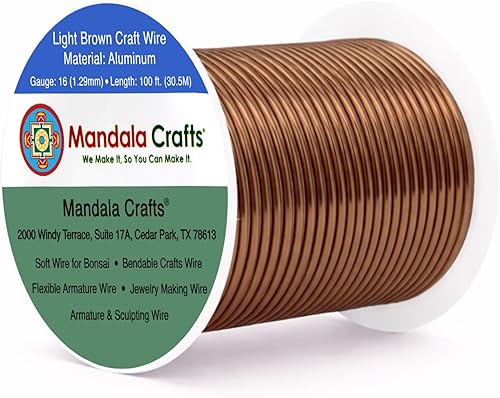
Best for practicing wire wrapping: Mandala Crafts Anodized Aluminum Wire
Key Features
- Soft aluminum wire that bends easily by hand and with basic pliers
- Anodized color finish, sold in several colors and gauges (check the gauge range on the live listing)
- Lets you practice wraps, spirals and loops without wasting copper or silver-plated wire
- Wire only, with no beads, findings or tools
This is the odd one out in the list, because it is not a kit. I include it because wire handling is where most beginners struggle, and cheap practice wire is the best way to build that skill. Aluminum is forgiving, and the colors make it easy to see whether a wrap is even.
What you give up is nearly everything else. You need your own pliers and cutters, and aluminum is too soft for strong clasps, hooks or pieces that must hold their shape for years. Treat it as a practice material. Check the gauge on the listing before you buy, since a very thick wire is hard to shape with small pliers.
What we liked
- Soft and easy to shape, which suits learning wraps and loops
- Colors make mistakes and wrap spacing easy to see
- A good partner for a separate pliers set
What we did not like
- Not a kit, so it is no use on its own
- Too soft for durable clasps and structural parts
- Rewrapping and reshaping can weaken or mark the wire
Why we picked it
It is the cheapest way to practice wire wrapping, and it works well alongside a tool set. Skip it if you want one box that arrives ready to use.
Best for better tools: Caydo Jewelry Pliers Set

Key Features
- Caydo is a known budget tool brand, and its sets typically include round-nose, chain-nose and flat-nose pliers plus cutters (confirm which pliers are in this set on the live listing)
- Aimed at people who already have beads and wire
- Better value if poor pliers are your main complaint with cheap kits
- Pairs well with a spool of practice wire
If you have tried a bundled kit and found the pliers soft, loose or rough, a dedicated set is the logical next step. Round-nose pliers make loops, chain-nose pliers grip and close, and flat-nose pliers hold and flatten. Owners of sets in this price range generally describe them as fine for hobby work, though comments on jaw alignment and cutter quality vary from set to set. Check recent reviews for those two points.
What you give up is everything except the tools. There are no beads, findings or instructions, so you buy materials separately. Budget pliers also lack the tight jaw alignment and smooth finish of professional tools, and the cutters can leave a slight burr on harder wire. See our Top 7 Best Jewelry Pliers Sets for Beginners guide when you are ready to compare further.
What we liked
- Focused on tools, so you are not paying for filler beads
- Covers the three plier types most beginners need
- Reusable if you move on to better materials
What we did not like
- No beads, wire, findings or guide included
- Budget-grade jaw finish and cutters, so expect some rough edges
- Not a complete gift on its own
Why we picked it
It is the right pick if you already own materials or find kit pliers frustrating. Skip it if you want a first-try box with everything inside.
Best for a colorful gift box: Cridoz Jewelry Making Kit
Key Features
- Bead-heavy assortment with wire, findings and basic tools for stringing and simple wire loops (confirm the contents on the live listing)
- Colorful and varied, so it suits gifts and craft nights
- Lets a beginner try beading first and move on to wire wrapping later
- Usually packed in a box or organizer, which helps with storage
This is the one I would point gift buyers toward when the recipient likes color and variety more than technique. A big assortment keeps a first session fun, and stringing beads needs less skill than wire wrapping, so the early results feel rewarding.
What you give up is polish. When a kit leans on bead variety, the wire is usually thin and the pliers basic. The finished pieces will look charming rather than refined, and the tools may not cut or hold wire cleanly. Check what the listing says about wire gauge and the tools included before buying.
What we liked
- Plenty of color and variety for a first try
- Includes tools and findings, so it works as a complete gift
- Easy way to start with beading before committing to wire work
What we did not like
- Thin wire and basic pliers limit more serious wire work
- Many beads are decorative rather than high quality
- Small parts need supervision around young children
Why we picked it
It offers the widest range of materials in a single box, which makes it a good gift or craft-night supply. Skip it if wire wrapping is your main goal, since the better wire and pliers are what you will end up buying anyway.
Buyer’s guide: how to choose
How to choose a jewelry making kit for beginners under $30
Start with what you want to make. If you like the idea of beading and are unsure about wire, pick a mixed kit. If you already know you want wraps and loops, spend on wire and pliers instead of a big pile of beads. Read the live listing for the contents before you buy, because kit descriptions vary and bundles change.
What a cheap jewelry making kit usually includes
Expect a small plier set, a few spools of thin craft wire, beads, findings (jump rings, clasps, earring hooks) and sometimes a jig or an instruction booklet. A storage box is common. The quantity is the selling point, not the quality of each item.
What is usually poor in budget kits: pliers and cutters
Pliers are the weak spot. Common problems are jaws that do not meet cleanly, rough or ridged surfaces that mark wire, and stiff or loose joints. Cutters are often not meant for anything harder than soft craft wire, and forcing them can dent the blades. The wire is the second weak spot, since it can be too thin to hold a shape or too soft to keep a clasp closed.
Wire gauge basics: 18, 20, 22, 24 and 26 gauge and what each is good for
A lower number means thicker wire. Roughly:
- 18 gauge (about 1.0 mm): sturdy; used for ear wires, clasps and structural pieces, and hard to bend with weak pliers.
- 20 gauge (about 0.8 mm): a good all-round size for headpins, bead links and simple frames.
- 22 gauge (about 0.64 mm): easy to shape and a common choice for wrapped loops.
- 24 gauge (about 0.5 mm): for fine wrapping and binding around thicker wire.
- 26 gauge (about 0.4 mm): very fine; used for delicate coiling and weaving.
Wire type: copper, aluminum, craft wire, plated and filled wire
Craft wire is usually coated copper or copper alloy and comes in many colors. Bare copper is soft, cheap and good for practice. Aluminum is lightweight and very soft, so it is fine for learning but weak for clasps. Plated wire has a thin surface layer that can wear through. Gold-filled and sterling silver wire cost more and are better saved for after you have the technique.
Kit versus separate tools and wire: which is the better first purchase
A kit is better if you are unsure about the hobby or buying a gift, because everything arrives together. Separate items are better if you know what you want to make: a decent pair of pliers and a spool or two of practice wire will often serve you better than a large box of mixed parts. Our picks include both kinds so you can choose the route.
When to upgrade, and what to buy first
Upgrade when the tools, not your technique, are holding you back: marked wire, loops that will not close, cutters that crush wire ends. Buy better pliers first, since they affect every project. Our Top 7 Best Jewelry Pliers Sets for Beginners guide covers the next step up.
Buying a kit as a gift: what to check before you give it
Check that tools are included, that the wire and findings suit the project, and that instructions or a clear starting project are provided. Check the recipient’s age too, as small parts and sharp wire ends are not suited to young children.
Safety and finishing: filing wire ends, eye protection and keeping small parts away from young children
Cut wire ends are sharp. File or tuck them in so they cannot scratch skin or snag clothing. Wear safety glasses when cutting, because snipped ends can fly. Keep beads, findings and cut wire away from young children and pets.
Frequently Asked Questions
Is a cheap jewelry making kit worth buying for a beginner?
Yes, as a trial. It lets you find out whether you enjoy the hobby before you spend on proper tools. Just treat it as practice material, not a lifelong toolbox.
What wire gauge should a beginner start with for wire wrapping?
22 gauge is a common starting point because it bends easily and holds a shape. Many beginners also use 20 gauge for sturdier loops and 24 gauge for wrapping.
Why do the pliers in budget kits feel so poor?
Low-cost pliers are usually made from softer metal with looser tolerances and rougher finishing. The jaws may not align well, which makes clean, even loops harder.
Do I need all three types of pliers to start?
Not strictly. Round-nose pliers make loops, chain-nose pliers grip and close, and cutters trim wire. Flat-nose pliers are helpful but you can begin with those three tools.
Can children use these kits?
Older children can use them with supervision. Check the age guidance on the listing, because small beads and sharp wire ends are unsuitable for young children.
Is copper wire or aluminum wire better for learning?
Both are good for practice. Aluminum is softer and lighter. Copper handles more like the wire used in finished pieces, so it is better for learning the feel of wraps and loops.
When should I upgrade from a starter kit?
When your tools mark or crush the wire, your loops will not close cleanly, or you want to make pieces to wear regularly or sell.
What is the difference between beading wire and craft wire?
Beading wire is a flexible, multistrand wire with a nylon coating, designed for stringing beads. Craft wire is solid wire you can bend and shape for wraps, loops and frames.
Will the jewelry I make from a budget kit tarnish or turn skin green?
It can. Bare copper and some plated or alloy findings may tarnish or leave a green mark on skin, depending on the metal and your body chemistry. Aluminum usually does not, and a clear sealant can slow the effect.
What should I buy first after outgrowing the kit?
A better pair of round-nose pliers, then chain-nose pliers and flush cutters, followed by a spool of wire in the metal you want to work with.
Final thoughts
A starter kit is a low-risk way to try wire wrapping and beading, and none of these products will replace good tools. For most people, the Paxcoo Jewelry Making Supplies Kit is my top pick because it covers beading and basic wire work in one box. If you already have beads and wire and your complaint is poor pliers, the Caydo Jewelry Pliers Set is the best value pick. Whichever you choose, confirm the contents on the live listing and plan to upgrade the pliers once the hobby sticks.