The first hard freeze of the season usually shows up on a weekday morning. You turn the key and the engine cranks slowly, or you hear a rapid click and the dash lights dim. There’s no second vehicle nearby and the jumper cables are in the garage at home.
Cold weather cuts a battery’s available cranking power, and it also thickens engine oil so the engine is harder to turn. The jump starter you need is the one you can least afford to find dead or underpowered.
I’m Karl D. McGrath, writing from Thomasville, Georgia. Our cold snaps are short, but they still catch drivers off guard, because a battery that was already weak in September often gives out the first time the temperature drops into the 20s.
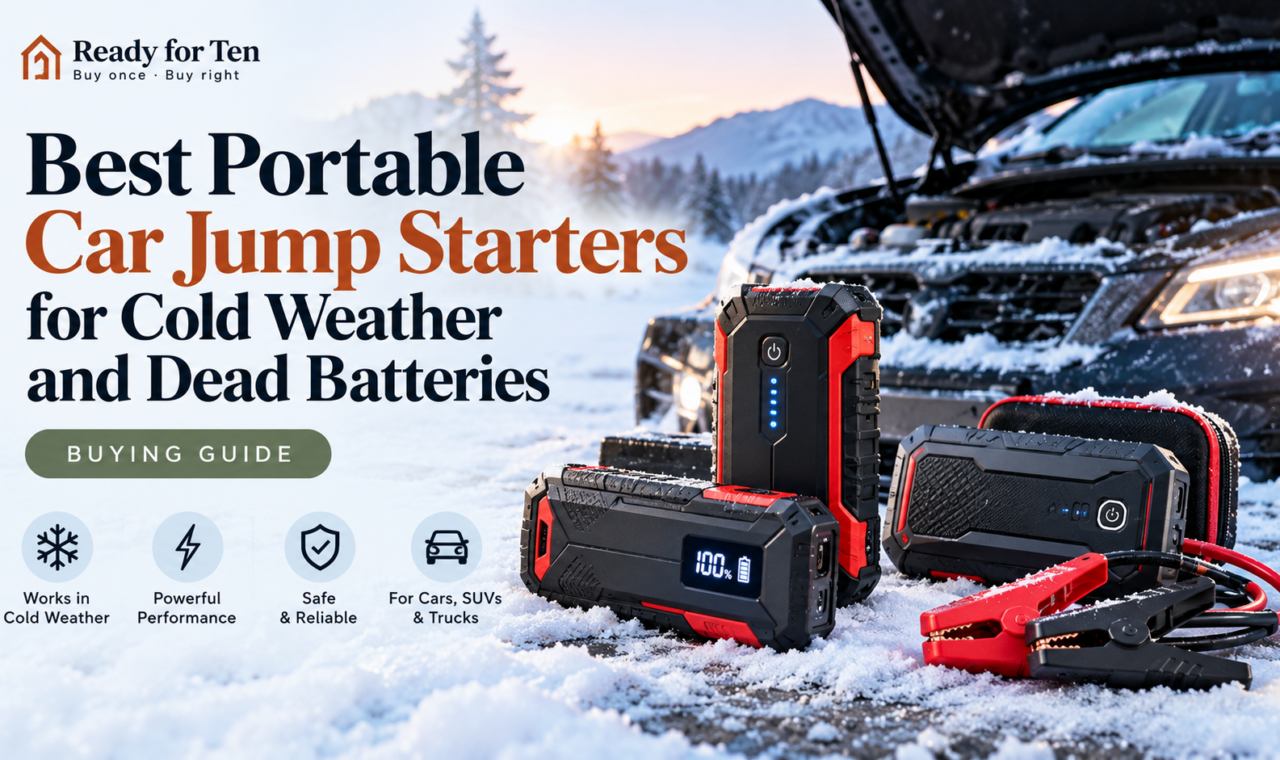
This guide to the Best Portable Car Jump Starters for Cold Weather and Dead Batteries is built around that scenario. It covers seven units for different vehicles and budgets: compact lithium packs, high-capacity lithium units, two heavy-duty lead-acid models, and a small micro-start pack.
One thing up front. These picks come from research: manufacturer specifications, product documentation and owner feedback. I have not bench-tested these units, and I’m not going to claim results I don’t have. Specs, engine-size ratings and warranty terms change between production runs, so check the current Amazon listing before you buy.
The main decision points are lithium versus lead-acid, real engine-size ratings (not just peak amps), safety features, how each type behaves in the cold, and extras like USB power, an air compressor or a flashlight. Each of these is covered in the buyer’s guide later on.
Our top picks
- Best overall for everyday cars, SUVs and small trucks: NOCO Boost Plus GB40
- Best step-up for larger gas engines and mixed family vehicles: NOCO Boost X GBX55
- Best heavy-duty lithium option for trucks, diesels and big V8s: NOCO Boost Pro GB150
- Best budget-friendly high-capacity lithium option: GOOLOO GP4000
- Best lead-acid unit for cold-weather reliability in a garage, shop or truck bed: Clore Automotive Jump-N-Carry JNC660
- Best 2-in-1 with a built-in air compressor for winter roadside problems: Clore Automotive Jump-N-Carry JNCAIR
- Best compact micro-start option for powersports and small-engine vehicles: Antigravity Batteries XP-10-HD
Comparison chart
| Product | Best for | Key spec (peak amps / rated engine size, per manufacturer) | Battery type | Warranty (confirm on listing) |
|---|---|---|---|---|
| NOCO Boost Plus GB40 | Everyday cars, SUVs and small trucks | 1000 amps; up to 6.0L gas / 3.0L diesel | Lithium | Manufacturer warranty; confirm term on Amazon |
| NOCO Boost X GBX55 | Larger gas engines, mixed family vehicles | 1750 amps; up to about 7.0L gas / 5.5L diesel | Lithium | Manufacturer warranty; confirm term on Amazon |
| NOCO Boost Pro GB150 | Trucks, diesels and big V8s | 4000 amps; up to about 10L gas / 8L diesel | Lithium | Manufacturer warranty; confirm term on Amazon |
| GOOLOO GP4000 | Budget-minded buyers who want high capacity | 4000 peak amps; about 26800mAh listed (peak rating, not continuous) | Lithium | Confirm on Amazon listing |
| Clore Automotive Jump-N-Carry JNC660 | Garage, shop or truck-bed use in cold weather | 1700 peak amps; check listing for engine guidance | Sealed lead-acid | Confirm on Amazon listing |
| Clore Automotive Jump-N-Carry JNCAIR | Jump starting plus tire inflation in one unit | 1700 peak amps; built-in air compressor | Lead-acid | Confirm on Amazon listing |
| Antigravity Batteries XP-10-HD | Powersports, small engines and slim emergency backup | Micro-start format; check peak amps and engine rating on listing | Lithium | Confirm on Amazon listing |
A note on reading the chart: peak amps are a marketing number measured under ideal conditions, and engine-size ratings tell you much more about whether a unit can turn your engine. Where a manufacturer publishes an engine rating, I’ve listed it, and where I’m not certain of a figure, the chart tells you to verify it on the listing instead of guessing.
Best for everyday cars, SUVs and small trucks: NOCO Boost Plus GB40

Key Features
- 1000-amp 12V lithium jump starter
- Rated by NOCO for engines up to 6.0L gas and 3.0L diesel (verify on the listing)
- UltraSafe spark-proof design with reverse-polarity protection
- Built-in LED flashlight with several modes
- USB output for charging a phone in an emergency
- Small enough for a glovebox or console
If I had to name one jump starter for the average household, this is it. Most commuter cars, crossovers and half-ton pickups fall inside its rated engine range, and the unit is small enough that you will actually keep it in the car. A jump starter sitting in the garage does nothing when the battery dies in a parking lot. Here in Thomasville a cold snap might last a few days, but that is long enough for a weak battery to give out, and the GB40 fits that scenario well.
This guide is based on research, not hands-on testing: NOCO’s specs, product documentation and owner feedback. Owners generally praise the simple clamp-on operation and the safety design, which stops the clamps from sending power if they are connected backward. Check the listing for the current specs and warranty term.
What we liked
- Engine rating covers most gas cars, SUVs and small trucks
- Safety features suit first-time users who are nervous about jumping a car
- Compact enough to leave in the vehicle
- Flashlight and USB output are useful on a dark, cold roadside
What we did not like
- Not the pick for large diesels or heavily loaded V8 trucks
- Lithium packs need periodic recharging, and leaving one in a freezing car for weeks without checking it is a gamble
- Pricier than many generic packs with similar peak-amp claims
Why we picked it
It matches what most drivers need: a realistic engine rating, solid safety protection and a size that makes it easy to carry. For a typical car or SUV, I would start here.
Best for larger gas engines and mixed family vehicles: NOCO Boost X GBX55

Key Features
- 1750-amp 12V lithium jump starter
- Rated for roughly 7.0L gas and 5.5L diesel engines (verify on the listing)
- Spark-proof clamps with reverse-polarity protection
- Higher-output flashlight and USB power for devices
- Built to handle repeated jumps per charge better than compact units
- Covered by NOCO’s manufacturer warranty (confirm the term on the listing)
The GBX55 makes sense if your household has more than one vehicle, or if one of them is a larger SUV, a three-quarter-ton pickup or a gas V8 that the GB40 would be stretched to start. The higher engine rating gives you more margin when the battery is deeply discharged and the oil is stiff. That margin is what you want on a cold morning.
The trade-off is size and cost. It is bigger than the GB40, so it takes more room in a console or door pocket, though it still fits behind a seat or in a cargo cubby. As with every pick here, the ratings come from the manufacturer’s documentation and owner reports, not my own testing, so confirm the engine size for your vehicle on the listing.
What we liked
- Meaningful step up in engine rating over the GB40
- Same spark-proof, reverse-polarity safety approach as the rest of the NOCO line
- Good for households with a mix of cars and trucks
- Extra headroom if a battery is very low
What we did not like
- Overkill for a small sedan that never leaves town
- Larger and heavier than the compact units
- Still not the best fit for the biggest diesels
Why we picked it
It is the sensible middle step for owners who have outgrown a compact pack but do not need a heavy-duty unit. One jump starter that can serve the whole driveway is a practical choice.
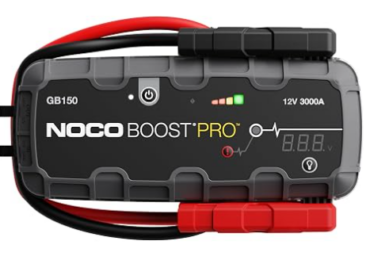
Best heavy-duty lithium option for trucks, diesels and big V8s: NOCO Boost Pro GB150
Key Features
- 4000-amp 12V lithium jump starter
- Rated for up to about 10L gas and 8L diesel engines (verify on the listing)
- Heavy-duty clamps and cable for large batteries
- Spark-proof safety with reverse-polarity protection
- Larger and heavier than the compact models, so it suits a truck cab or toolbox better than a glovebox
- Built-in flashlight
Diesels are hard on batteries. High compression and thick, cold oil mean the starter draws a lot of current, so a small pack that works on a gas sedan may struggle. The GB150 is built for that job, and its rating covers big-block gas engines, heavy-duty pickups and many diesels. It is also a reasonable choice for farm trucks, work vans and anyone who is regularly stranded by large batteries.
It is a bigger, more serious tool, and you should buy it for the vehicle you actually have. If you drive a compact car, the extra size and money buy you nothing. The specs here come from NOCO’s published information and owner feedback, not from my own bench work, so check the listing for the current rating and warranty terms.
What we liked
- Highest engine rating of the three NOCO picks
- Heavy-duty clamps and cable suited to large batteries
- Safety protections carry over from the smaller units
- A good fit for trucks, diesels and equipment that is hard to start in the cold
What we did not like
- Too large for a glovebox, and too much for most small cars
- Higher price than compact packs
- Still needs regular recharging to be ready when you need it
Why we picked it
When the engine is big or the battery is deeply dead, capacity matters more than convenience. The GB150 is the lithium pack I would look at first for a diesel truck or a large V8.
Best for budget-friendly high capacity: GOOLOO GP4000

Key Features
- 12V lithium jump starter with a 4000-amp peak rating
- Large internal battery that doubles as a power bank (about 26800mAh listed; verify on the listing)
- Safety protections including reverse-polarity and overcurrent protection
- USB output ports and a built-in LED light
- Marketed by the manufacturer for larger gas and diesel engines
The GP4000 is for drivers who want a big-capacity lithium pack without paying NOCO prices. GOOLOO generally sells below comparable NOCO units, so the appeal is value. The large internal battery also makes it a decent phone and device charger during a winter power outage.
Treat the 4000-amp figure with caution. It is a peak rating, not a continuous one, and it says little about how the pack performs on a cold engine. Compare the listed engine-size range with what you drive, and read recent owner feedback, especially from cold climates, before deciding. Lithium packs deliver less in freezing temperatures, so keep this one indoors until you need it. This guide is based on research, not hands-on testing, so check the current specs and warranty on the Amazon listing.
What we liked
- High-capacity lithium pack at a budget-friendly price relative to the NOCO models
- Doubles as a sizable USB power bank
- Reverse-polarity and overcurrent protection are part of the package
- Built-in light is handy for roadside work
What we did not like
- The 4000-amp figure is a peak rating, so it is a poor basis for comparing brands
- Brand support and long-term reliability are harder to judge than with NOCO
- Output drops when the pack itself is cold
Why we picked it
It is the pick for shoppers who want large-engine capacity and power-bank flexibility on a tighter budget. Buy it if you will keep it charged and warm. Skip it if you want the strongest track record in a jump starter.
Best lead-acid unit for garage, shop or truck bed: Clore Automotive Jump-N-Carry JNC660

Key Features
- 12V sealed lead-acid jump starter rated at 1700 peak amps
- Heavy-duty clamps and cable built for frequent shop use
- Built-in battery-level indicator and a 12V outlet (verify the exact features on the listing)
- Heavy at roughly 18 lb (verify), which is the cost of the lead-acid design
- Long-time professional and shop favorite
- Needs regular recharging to stay healthy
The JNC660 is an old-school jump starter, and in cold weather that can be an advantage. Lead-acid packs generally tolerate cold and long storage better than lithium, provided they stay charged. The thick cable and large clamps are meant for repeated daily use in a shop, not an occasional rescue.
You pay for that in weight and size. It will not slip into a glovebox, and you will want it in a truck bed, a garage or a work vehicle. It also needs a periodic recharge. A lead-acid pack left empty for months can be permanently damaged. Confirm the current specs, charger details and warranty on the listing.
What we liked
- Heavy-duty clamps and cable suited to repeated use
- Lead-acid chemistry copes with cold storage better than lithium
- Battery-level indicator makes charge checks easy
- Strong reputation among shops and professionals
What we did not like
- Heavy and bulky next to lithium packs
- Does not store well if left discharged
- Not a good fit for a glovebox or a small car
Why we picked it
We picked it for drivers who keep a jump starter in a garage, shop or truck and want a rugged unit that tolerates cold. If you want something light enough for a console, choose a lithium model.
Best 2-in-1 with an air compressor: Clore Automotive Jump-N-Carry JNCAIR

Key Features
- 12V lead-acid jump starter rated at 1700 peak amps
- Integrated air compressor for inflating low tires
- Heavy-duty clamps and a carry handle
- Battery and power indicators (verify the exact features on the listing)
- Heavy and bulky, better for a truck, garage or work van than a compact car
- Covers two common cold-weather problems in one unit
Cold air lowers tire pressure, so a dead battery and a soft tire can show up on the same frosty morning. The JNCAIR covers both. It pairs the Jump-N-Carry’s jump-starting capability with a built-in compressor, which saves carrying a separate inflator.
The trade-offs are the same as with the JNC660, plus extra bulk. It is a work-vehicle or garage tool, not a glovebox item. As with any lead-acid pack, keep it charged. Check the compressor’s specifications and warranty on the listing before you order.
What we liked
- Jump starter and tire inflator in one unit
- Rugged clamps and a carry handle for frequent use
- Lead-acid design suits cold storage if kept charged
- Reduces the number of separate emergency tools to carry
What we did not like
- Heavy and bulky
- Needs regular recharging
- Overkill for a driver who only wants a compact jump pack
Why we picked it
It suits fleet owners, truck drivers and garage keepers who want one unit for dead batteries and low tires. If you need only a jump, the JNC660 or a lithium pack is the simpler choice.
Best for powersports and small-engine vehicles: Antigravity Batteries XP-10-HD

Key Features
- 12V Micro-Start lithium jump starter from Antigravity Batteries, a company best known for lightweight lithium batteries
- Much smaller and lighter than full-size jump packs, and easy to carry in a saddlebag, trunk pocket or door pocket
- Built-in safety protections such as reverse-polarity protection (confirm the full list on the current listing)
- Suits cars, motorcycles, ATVs, side-by-sides and similar vehicles, but check the listed engine-size rating before buying for anything large
- Small enough to leave in a bike or small vehicle without giving up cargo space
- Peak amps, engine-size rating and warranty term should be confirmed on the listing, because I’m not assuming them here
The XP-10-HD fills a different role from the other jump starters in this guide. The NOCO and Clore units are built around SUVs, trucks and shop use. The Antigravity pack is for people whose “vehicle” might be a motorcycle, a UTV or a small car. It also works as a slim backup for someone who already owns a bigger unit and wants a second pack that fits in a place the big one won’t.
I haven’t handled this unit. This write-up is based on manufacturer information, product documentation and owner feedback. That matters here because Antigravity sells several Micro-Start models with different capacities, and the numbers differ between them. Before you buy, confirm the peak amps, the rated engine size for gas and diesel, and the warranty on the current Amazon listing. Don’t assume a small, light pack will turn over a large engine in the cold.
Cold weather matters more with a pack this size. Lithium cells deliver less current when they are very cold, and a small pack has less reserve to give up. In practice, keep it somewhere that stays reasonably warm, such as a house, a heated garage or an inside jacket pocket, and bring it out when you need it. A small pack left overnight in a freezing trunk or on an unheated bike is the worst case. For a Georgia cold snap that is manageable, but it is still worth planning for.
The real trade-off is capacity versus convenience. A compact pack fits where a 4000-amp unit can’t, and it is more likely to be with the vehicle when you need it. The cost is headroom. It is a better match for a small gas engine or a motorcycle than for a V8 truck or a diesel with a weak battery. If you drive a large engine and only want one jump starter, the NOCO Boost Plus GB40 or a larger unit is the safer choice. The XP-10-HD makes the most sense for riders, small-vehicle owners and anyone building a two-pack emergency kit.
What we liked
- Small and light enough to actually stay with the vehicle, which is half the battle with emergency gear
- A natural fit for motorcycles, ATVs and other powersports where a full-size pack is awkward to carry
- Works well as a second, slimmer backup alongside a larger unit in the truck or garage
- Lithium chemistry keeps weight down compared with lead-acid
What we did not like
- Limited headroom for large gas engines, diesels or a deeply discharged battery in the cold
- Specs vary across the Antigravity line, so it’s easy to buy the wrong model if you don’t read the listing closely
- Cold-sensitive, so it needs to be stored somewhere reasonably warm in a hard freeze
- Premium pricing is common for this style of pack, so check whether a larger, cheaper unit fits your needs better
Why we picked it
We picked the Antigravity Batteries XP-10-HD because compact, powersports-friendly jump starters are underserved in most buying guides, and plenty of readers need one. It’s the right choice if your priority is a pack that fits in a bike or small vehicle, or if you want a slim backup in addition to a heavier unit. If you drive a large truck or a diesel, skip it for your main unit and choose one of the higher-capacity NOCO or Clore options instead.
Buyer’s guide: how to choose
How cold weather affects batteries and jump starters
Cold slows the chemical reaction inside a lead-acid car battery, so less cranking power is available. At the same time, cold engine oil is thicker and the engine takes more effort to turn. A battery that was marginal in October can fail on the first hard freeze. A jump starter faces the same chemistry, and lithium packs also have temperature limits for use and for charging. Check the operating range in the manual or on the listing instead of assuming any pack works at any temperature.
Lithium vs. lead-acid jump starters in freezing temperatures
Lithium packs are compact and light, hold a charge well in storage, and often double as power banks. Their weak spots are temperature limits, and many manufacturers advise against charging a lithium pack when it is frozen. Lead-acid units like the Clore Jump-N-Carry models are heavy and bulky but have a long record in shops and trucks, and they handle cold and long storage well if kept charged. If the unit lives in a glovebox, lithium is the practical choice. If it lives in a garage or truck bed, lead-acid is worth considering.
Peak amps vs. real engine-size ratings: how to size a jump starter
Peak amps are a marketing number, measured for a split second under conditions you will not see in a driveway. Compare brands by the manufacturer’s stated engine-size rating (for example, “up to X liters gas and Y liters diesel”) instead. Buy a step above your biggest engine, because cold weather and a deeply drained battery both raise the demand. Confirm the rating on the current listing before you order.
Gas vs. diesel and why diesels need more capacity
Diesels have higher compression and typically need more cranking power, especially cold. Many diesel pickups carry two batteries. If you own a diesel, buy a pack that is explicitly rated for your engine size, and do not rely on a compact unit’s peak-amp figure.
Safety features to insist on (spark-proof clamps, reverse-polarity protection, overcurrent and temperature protection)
A jump starter is a battery connected to a car’s electrical system, so safety features matter. Look for:
- Spark-proof clamps that stay inactive until they detect a proper connection
- Reverse-polarity protection against swapped clamps
- Overcurrent, short-circuit and overheating protection
- Clear indicator lights so you know the connection is good
These features reduce the risk but do not replace reading the manual.
Keeping a jump starter charged and where to store it in winter
A jump starter that is dead when you need it is worthless. Charge it fully when it arrives, check it monthly through winter, and top it up after every use. Many manufacturers suggest recharging lithium units every few months even if unused, so follow your model’s guidance. Avoid leaving a lithium pack in a parked car through extreme heat or deep cold. A garage shelf or indoor closet is better, and you can carry it in the car on days when a freeze is forecast.
Useful extras: USB power bank, flashlight, air compressor, 12V outlet
A built-in flashlight is more useful than it sounds on a dark roadside. USB output can keep a phone alive when you are waiting on help. The Clore JNCAIR adds a compressor, which helps because cold air lowers tire pressure. Treat extras as tie-breakers, because the core job is starting your engine.
How to jump-start a car safely, step by step
- Read your vehicle manual and the jump starter manual. Some vehicles have dedicated jump points, and some start-stop or hybrid systems have specific procedures.
- Turn off the ignition, lights, heater and accessories, and make sure the jump starter is off.
- Connect the red clamp to the positive (+) terminal of the dead battery.
- Connect the black clamp to the negative terminal or, if your manual says so, to bare unpainted metal on the engine away from the battery.
- Turn on the jump starter and wait for its ready indicator.
- Try starting the engine for a few seconds only. If it does not start, wait a minute or two before trying again.
- Once running, turn off the jump starter and remove the clamps in reverse order (black first, then red).
When a jump will not fix the problem: signs of a failing battery, alternator or starter
A jump gets you going, but it does not tell you why the battery died. If your car needs jumping again within a day or two, suspect the battery or charging system. A battery that is several years old and cranks slowly in the cold is a likely candidate. If the car starts but dies shortly after you disconnect, the alternator may not be charging. A single loud click with a healthy battery points toward the starter. Many auto parts stores will test a battery and charging system, and it is worth doing after any jump.
Portability, size and clamp quality
Be realistic about where the unit will live. A compact lithium pack fits in a console and gets used. A heavier lead-acid unit may stay in the garage and not be with you when you break down. Clamps should feel solid, with strong springs and clean contact surfaces, and the cable should be long enough to reach from the battery to the clamp point in a tight engine bay. If you are already packing emergency gear for a winter road trip, a roof cargo basket can free up cabin space for it.
Frequently Asked Questions
Do jump starters work in freezing temperatures?
Yes, but performance depends on the type and condition of the pack. Cold reduces available power, and lithium packs have manufacturer-specified operating ranges. Check the listed temperature range, and keep the pack warm until you need it if you can.
How many amps do I need to jump-start my car in cold weather?
Do not shop by peak amps alone. Use the manufacturer’s engine-size rating, choose a unit rated above your engine, and allow extra margin for cold and for diesels.
Is a lithium or lead-acid jump starter better for winter?
Lithium is easier to carry and store, while lead-acid is bulkier but tolerant of cold and long storage when kept charged. For a glovebox pack, choose lithium. For a shop or truck bed, lead-acid is a solid choice.
Should I keep my jump starter in the car all winter?
You can, but check the manufacturer’s storage temperature range first. Extreme cold can reduce a lithium pack’s output, so some owners keep it indoors and carry it on freezing days. Whichever you choose, check its charge regularly.
How often should I recharge a portable jump starter?
Follow your model’s manual. A common recommendation for lithium packs is to top them up every few months, and always after use. Lead-acid units need regular recharging to stay healthy.
Can a jump starter damage my car’s electronics?
Quality units with reverse-polarity, overcurrent and surge protections are designed to reduce that risk, but the risk is not zero. Follow the correct connection order, use a pack suited to your vehicle, and check your vehicle manual for any specific jump-start instructions.
How many jumps can I get on one charge?
It varies by model, battery condition, engine size and temperature. Manufacturers sometimes state a figure, but cold and a deeply drained battery will lower it. Do not count on many back-to-back attempts.
Can I jump-start a completely dead battery with a portable jump starter?
Often, yes, but some packs will not detect a very low-voltage battery and need a manual override or boost button. Check your unit’s manual for how to use it safely. A battery that is completely flat may be damaged and need replacing.
What should I do if my car does not start after a jump?
Check that the clamps have solid contact, wait a minute, and try again. If it still does not start, stop trying, because repeated attempts can drain the pack and stress the starter. The problem may be the starter, fuel, ignition or a failed battery, and it is time to call for help.
Can I use a jump starter on a diesel truck or SUV?
Yes, if it is rated for your engine. Look for an explicit diesel rating that covers your engine size, and consider a heavy-duty unit such as the NOCO Boost Pro GB150 for large diesels. Some trucks use dual batteries, so check your manual.
Do I still need jumper cables?
Not necessarily. A jump starter lets you restart a vehicle without another car. Cables are cheap and can still be handy if a friend is nearby, but they are not a substitute when you are alone.
How long does a jump starter last before it needs replacing?
There is no single answer. Lifespan depends on battery chemistry, how often you use and recharge it, and how it is stored. If it no longer holds a charge, struggles to start your engine or its case looks swollen or damaged, replace it.
Final thoughts
For most drivers, the NOCO Boost Plus GB40 is the best overall pick. It is compact, has the safety features a jump starter should have, and suits everyday cars, SUVs and small trucks. If you drive a bigger engine or want extra margin, step up to the NOCO Boost X GBX55 or the Boost Pro GB150. For the best value, the GOOLOO GP4000 offers high capacity for less than the premium brands, though I would compare its engine-size rating with owner feedback before buying. These picks are based on research and not hands-on testing, so confirm the specs and warranty on the Amazon listing. Whichever you choose, charge it before the first cold snap and keep it where you can reach it.
— Karl D. McGrath, Ready for Ten