Most power station guides start with a ranking. This one starts with a number you can calculate: how many watts your car camping setup actually needs. Pick a station that is too small and the inverter shuts off the moment the kettle or fridge compressor kicks on. Pick one that is too big and you carry extra weight, and pay for capacity you never use.
I’m Karl McGrath, writing from Thomasville, Georgia, and I’ve organized the seven picks below by wattage tier, from about 300W up to 3,000W, so you can match the tier to how you really camp.
Two numbers matter. Watts tell you how much you can run at the same moment. Watt-hours tell you how long you can run it. In the buyer’s guide I walk through a simple method: list your devices, add their running watts, leave 20-25% headroom, allow extra for surge on fridges and pumps, then estimate watt-hours per night.
A phone-and-lights weekend, a CPAP, a 12V fridge, remote work on a laptop, an electric kettle or induction burner, and a full family basecamp each land in a different tier.
A note on how I chose. This guide is written from research: manufacturer specifications and owner feedback, not hands-on bench testing, and I have not invented any test numbers.
I picked real, widely sold models with clear wattage steps between them, and favored LiFePO4 batteries where available. Prices, warranty terms and even specs can change between production runs and sellers, so check the current details on each Amazon listing before you buy. I also mention in passing that some tire inflators and jump starters can run off a station, but this guide stays focused on power.
Our top picks
- Best for minimalist weekend campers (about 300W): EcoFlow RIVER 2
- Best for small-footprint campers who want more AC output (about 600W): Bluetti EB3A
- Best for couples on a 1-2 night trip (about 500W): Jackery Explorer 500
- Best for mid-size setups with a fridge and CPAP (about 800W): EcoFlow RIVER 2 Pro
- Best for remote work and family trips (about 1,500W): Jackery Explorer 1000 v2
- Best for flexible 1,800W capability and expandable capacity: EcoFlow DELTA 2
- Best for long off-grid trips and big basecamps (about 3,000W): Jackery Explorer 2000 Plus
Comparison chart
| Product | Best for | Capacity (Wh) | Continuous AC output (W) | Battery chemistry | Warranty (confirm on the Amazon listing) |
|---|---|---|---|---|---|
| EcoFlow RIVER 2 | Phones, lights, camera batteries, a laptop | 256 | 300 | LiFePO4 | Varies by region and seller; confirm on listing |
| Bluetti EB3A | Small battery, higher AC output | 268 | 600 | LiFePO4 | Varies by region and seller; confirm on listing |
| Jackery Explorer 500 | 1-2 night trips for two: lights, laptop, small fan | 518 | 500 | Lithium-ion (not LiFePO4) | Varies by region and seller; confirm on listing |
| EcoFlow RIVER 2 Pro | 12V fridge, CPAP and laptop for a weekend | 768 | 800 | LiFePO4 | Varies by region and seller; confirm on listing |
| Jackery Explorer 1000 v2 | Remote work, family trips, small appliances in bursts | 1,070 | 1,500 | LiFePO4 | Varies by region and seller; confirm on listing |
| EcoFlow DELTA 2 | Induction burner, kettle or small heater runs; expandable | 1,024 | 1,800 | LiFePO4 | Varies by region and seller; confirm on listing |
| Jackery Explorer 2000 Plus | Basecamps running several appliances at once | 2,042 | 3,000 | LiFePO4 | Varies by region and seller; confirm on listing |
Best for minimalist weekend campers: EcoFlow RIVER 2

Key Features
- 256Wh LiFePO4 battery
- 300W continuous AC output, with X-Boost to run some devices rated a bit higher
- Compact and light enough to carry with one hand
- Multiple USB-A and USB-C ports plus a 12V car-style output
- Good fit for people who only charge small electronics, not appliances
The RIVER 2 is the entry tier of this guide. If your car camping power list is phones, a headlamp or string lights, camera batteries and maybe a laptop top-up, 300W is plenty. The real limit is capacity: 256Wh is a small tank, so this is a charge-the-gadgets unit, not something to run a fridge or CPAP on.
Because it uses LiFePO4 cells, it should hold up to far more charge cycles than older lithium-ion packs. That matters for a unit you will plug in and drain over and over. This is based on manufacturer specs and owner feedback, not our own bench testing.
What we liked
- LiFePO4 chemistry in a very small, light package
- Plenty of USB-C and USB-A ports, so no AC adapters for most gear
- Easy to stash in a footwell or under a seat
What we did not like
- 256Wh runs out quickly if you add a laptop on top of phones and lights
- 300W rules out kettles, heaters and most kitchen appliances
Why we picked it
It is the sensible starting point for weekend campers who want reliable device power without paying for watts they will never use.
Best for small-footprint campers who want more AC output: Bluetti EB3A

Key Features
- 268Wh LiFePO4 battery
- 600W AC inverter, with a higher surge rating
- Compact size, easy to tuck into a car footwell or cargo area
- AC outlets, USB ports, a wireless charging pad and 12V outputs
- Higher wattage than its capacity suggests, but the small battery drains fast under heavy loads
The EB3A has nearly the same capacity as the RIVER 2 but a 600W inverter, so it can power things the smaller unit may not, such as a laptop with a bulky charger, a small blender, or a compact fan with a motor start. Wattage and watt-hours are separate numbers, though. A 500W load will drain 268Wh in well under an hour, once inverter losses are counted.
Think of it as a unit with a strong inverter for short jobs, not one with a big reserve. The wireless charging pad is a small convenience for a phone in a tent or vehicle.
What we liked
- 600W output in a package about the size of the RIVER 2
- LiFePO4 battery
- Wireless pad and 12V outputs add flexibility
What we did not like
- Capacity is the bottleneck, so heavy loads end the night early
- Easy to buy for the wattage and be disappointed by the runtime
Why we picked it
It suits campers who want a small, portable unit with extra headroom for the occasional higher-draw device.
Best for couples on a 1-2 night trip: Jackery Explorer 500

Key Features
- 518Wh capacity
- 500W continuous AC output, with a higher surge rating
- Built-in carry handle
- AC, USB-A, USB-C and 12V car port outputs
- Simple layout aimed at first-time buyers
With roughly double the capacity of the two units above, the Explorer 500 can cover two people’s phones, lights, a laptop and a small fan across a one- or two-night trip. The layout is easy to read, and the handle makes it simple to move between the car and a campsite table.
Jackery has updated this line over the years, and chemistry and specs can differ between versions. Check the listing to see which one you are buying, and confirm the battery type, port list and warranty before ordering.
What we liked
- Capacity is a step up for a two-person weekend
- Straightforward controls and a built-in handle
- Covers the usual mix of AC, USB and 12V devices
What we did not like
- 500W is not enough for a fridge with a high startup surge in some cases, so check your compressor rating
- Heavier and bulkier than the 256-268Wh options
Why we picked it
It is a no-fuss middle step for first-time buyers who want a bit more runtime without moving up to a fridge-capable unit.
Best for mid-size setups: EcoFlow RIVER 2 Pro
Key Features
- 768Wh LiFePO4 battery
- 800W AC output, with X-Boost for some higher-draw devices
- Fast AC recharging, plus solar and 12V car port charging
- Capacity suits a fridge plus overnight devices
- Portable enough for one person to lift in and out of a car
This is the tier where car camping gets comfortable. A 12V compressor fridge, a CPAP and a laptop all fit within 800W of output, and 768Wh gives you a realistic shot at a full weekend if you ration the laptop. The fridge is the variable. It cycles on and off, so check its daily watt-hour figure instead of its peak rating.
This write-up comes from manufacturer specs and owner feedback, not our own testing. Confirm the current specs and warranty on the listing before you buy.
What we liked
- 800W covers most non-heating gear
- Multiple recharge routes, including a car port for while you drive Drawing from the car port with the engine off can drain your battery, so keep one of our portable car jump starters handy.
- LiFePO4 chemistry suits repeated camping use
What we did not like
- Kettles, induction burners and heaters are out of reach, even with X-Boost If you want hot meals, see our best camping stoves for car camping.
- A fridge plus a heated CPAP humidifier can drain it faster than you expect
Why we picked it
It is the sweet spot for campers whose essentials are a fridge, sleep gear and a laptop. You get real overnight capacity without stepping up to a unit that is awkward to carry.
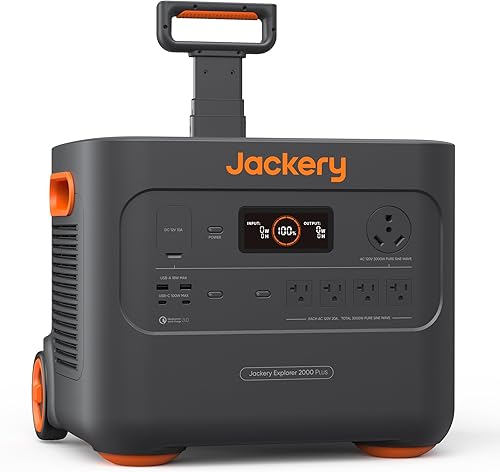
Best for remote work and family trips: Jackery Explorer 1000 v2
Key Features
- 1,070Wh LiFePO4 battery
- 1,500W continuous AC output, with a high surge rating
- Can run many small kitchen items, such as a low-wattage kettle or coffee maker, in short bursts
- Solar input available for multi-day trips
- Handle and relatively compact size for its class
The 1,500W tier suits families and remote workers. You can run a fridge, charge laptops and keep lights on, and still have output left for the occasional small appliance. A coffee maker or kettle works for a few minutes at a time, but each one uses a real slice of the battery. Boiling water for a few cups is fine; cooking every meal this way is not.
The surge rating helps with compressor startup. Capacity is the limit, not output. At just over 1kWh, running a fridge and several devices for three or four days without recharging will need solar or a drive in between.
What we liked
- Enough output for short kettle or coffee runs
- LiFePO4 battery with solar input for longer trips
- Carry handle and a manageable footprint
What we did not like
- Heavy-draw appliances drain 1,070Wh quickly
- Costs noticeably more than the 800W tier, so it is overkill if you only run a fridge and phones
Why we picked it
It gives you headroom for varied loads without being as large as the 2,000Wh-plus stations. Choose it if your list includes a laptop, a fridge and the occasional small appliance.
Best for expandable 1,800W capability: EcoFlow DELTA 2

Key Features
- 1,024Wh LiFePO4 battery, expandable with EcoFlow add-on batteries
- 1,800W continuous AC output, with X-Boost for some higher-draw resistive loads
- Many output ports, including multiple AC outlets
- Fast AC recharging
- Strong choice if you expect to add batteries or panels later
The DELTA 2 is for campers who want to cook or boil water with electricity. An induction burner or kettle in the 1,500W to 1,800W range is within reach, and X-Boost may stretch to some resistive loads rated a bit higher. Check your appliance’s rating against the station’s limits first, because X-Boost does not suit every device.
Its main advantage over similar-capacity units is expandability. You can start with the base unit and add an EcoFlow extra battery later if your trips get longer. The same caution applies as with any 1kWh station: a 1,500W burner empties it in well under an hour of continuous use, so cook in short bursts.
What we liked
- High output for cooking and boiling gear
- Expansion path for longer trips
- Plenty of ports for multiple devices
What we did not like
- Heavier and bulkier than the 800W tier
- Base capacity is modest for its output, so heavy loads drain it quickly
- Add-on batteries and solar panels cost extra
Why we picked it
It is the best fit if you want electric cooking now and room to grow later. If you never plan to run heating loads, the cheaper tiers make more sense.
Best for long off-grid trips and big basecamps: Jackery Explorer 2000 Plus
Key Features
- 2,042Wh capacity, expandable with Jackery add-on battery packs
- 3,000W continuous AC output, with a much higher surge rating
- Can run higher-draw tools and appliances that smaller stations cannot
- Solar charging support for multi-day trips
- Heavy and bulky, so it suits a vehicle-based or basecamp role better than grab-and-go use Other gear that earns trunk space includes portable tire inflators for car trunks.
This is the top tier of our wattage ladder, and most car campers do not need it. The 3,000W output matters when you want to run several things at once: a compressor fridge, a laptop setup, an electric kettle and maybe a small induction burner, without watching the total. A 1,500W or 1,800W station makes you stagger those loads. This one mostly lets you stop thinking about it.
The capacity is the other half. About 2kWh gives you a comfortable cushion for a fridge and overnight devices over a long weekend, and the expansion packs extend that for a group, a long trip or remote work from a campsite. Keep the watts-versus-watt-hours rule in mind, though. A 3,000W inverter does not mean 2,042Wh will last long under a heavy load. A 1,500W kettle and a 1,000W burner together will drain it in well under two hours, so the high output is for convenience and flexibility, not for running big loads all day.
Size is the real trade-off. This is a roughly 60-pound unit, so it is not something you lift in and out of a trunk casually. It makes the most sense in an SUV, van or truck where it can stay in place, ideally strapped down and ventilated. If you tent-camp at a different site every night and haul gear a short distance, a smaller station will wear on you less. Check the listing for the current port layout, solar input limits, expansion compatibility and warranty terms before you buy, since Jackery has updated its lineup over time.
What we liked
- 3,000W continuous output covers nearly any car camping appliance combination
- Over 2kWh of capacity, with room to expand for longer trips
- LiFePO4 chemistry, which generally offers long cycle life
- Solar input makes multi-day off-grid use realistic
- Can also serve as home backup for essentials during an outage
What we did not like
- Heavy and bulky, so it is awkward for anyone who needs to carry it far
- Far more output than a typical phone, light and fridge setup needs
- Likely the highest cost of the seven picks, and expansion packs add to it
- Heavy loads still drain the battery quickly, whatever the wattage rating
Why we picked it
It is our pick for campers whose list includes several appliances, group trips or extended off-grid stays, where smaller stations would force constant load management. If your list is a phone, lights and a laptop, skip it and save money and cargo space with one of the smaller picks above.
Buyer’s guide: how to choose
Watts vs. watt-hours: what each number tells you
Watts (W) measure how much power a device draws at one moment, so they decide what you can run at the same time. Watt-hours (Wh) measure stored energy, so they decide how long you can run it. A 300W station with 256Wh and a 300W station with 1,000Wh can power the same devices, but the second lasts roughly four times longer.
How to calculate your wattage: add up running watts and leave 20-25% headroom
List every device you might run at once and add up their running watts from the label or manual. Multiply by 1.2 to 1.25 for headroom. If your total is 400W, shop for 500W or more.
Surge (peak) watts and why fridges, compressors and pumps need extra
Motors and compressors draw a brief spike when they start, often several times their running wattage. Stations list a surge rating for this. A 12V compressor fridge on DC rarely strains a station, but an AC compressor, pump or power tool can trip a small inverter. Check the startup draw of anything motorized.
Estimating watt-hours per night: watts x hours of use, plus inverter losses
Multiply each device’s watts by its hours of use, then add the results. Running through the AC inverter wastes some energy, so plan on usable capacity of roughly 85% of the rated Wh. A 768Wh station is a 650Wh planning number. DC and USB outputs are usually more efficient than AC.
Wattage tiers for car camping: 300W, 500-600W, 800W, 1,500W, 1,800W and 3,000W
- 300W: phones, lights, cameras, a laptop.
- 500-600W: the same, plus a fan or a small CPAP setup.
- 800W: a 12V fridge plus overnight devices.
- 1,500W: remote work, family trips and short bursts from small kitchen items.
- 1,800W: an induction burner or kettle.
- 3,000W: several appliances at once at a basecamp.
Typical device wattages: phone, LED lights, laptop, CPAP, 12V fridge, fan, kettle, induction burner, space heater
These are ballpark figures, so check your own labels.
- Phone charging: about 10-25W.
- LED lantern or string lights: about 3-10W.
- Laptop: about 45-100W.
- CPAP: about 30-60W, more with a heated humidifier.
- 12V compressor fridge: about 40-60W while the compressor runs, which is only part of the time.
- Fan: about 10-50W.
- Electric kettle: about 600-1,500W.
- Induction burner: about 1,000-1,800W.
- Space heater: usually 1,500W.
Appliances to avoid on small stations: heaters, hair dryers, toasters, microwaves
Anything that makes heat from electricity is a power hog. Space heaters, hair dryers, toasters and microwaves can drain a mid-size station in under an hour. Many electric griddles and air fryers also draw well over 1,000W, so they belong in the 1,500W-and-up tiers, and only for short cooks.
LiFePO4 vs. other battery chemistries and cycle life
LiFePO4 (lithium iron phosphate) typically lasts far longer than older lithium-ion (NMC) cells. Many LiFePO4 stations are rated for around 3,000 cycles to 80% capacity, versus a few hundred to under a thousand for NMC. It is also generally more thermally stable. Confirm the rating on each listing.
Charging options: wall, 12V car port while driving, solar input limits
Wall charging is the fastest. The 12V car port is convenient on a drive but slow, often around 100W. Solar is limited by the station’s maximum solar input, and real output is usually well below a panel’s rated watts. A 100W panel might add a few hundred Wh on a sunny day.
Weight, size and where it fits in your vehicle
Capacity means weight. The 1,000Wh class is manageable for one person, and 2,000Wh-plus units are heavy enough that you will want to leave them in the vehicle. Measure your cargo space and secure the unit so it cannot slide.
Safety: ventilation, temperature limits, not charging in a hot parked car, and airline limits (a power station cannot fly)
- Leave vents clear and never cover a running unit.
- Respect the temperature limits in the manual, since many stations restrict charging in freezing conditions. For the rest of your kit, see our guide to packing the camping essentials.
- Do not leave one charging or stored in a hot parked car.
- Airlines limit lithium batteries to about 100Wh in carry-on, and larger ones need airline approval. Power stations exceed that, so they cannot fly.
Warranty, support and checking the current specs on the listing
Warranty terms and specs change between product revisions. I compiled this guide from manufacturer information and owner feedback, so confirm the capacity, output, ports and warranty on the Amazon listing before you buy.
Frequently Asked Questions
How many watts do I need in a portable power station for car camping?
For phones, lights and a laptop, 300W is enough. Add a 12V fridge or CPAP and 500-800W is more comfortable. Only cooking or heating appliances push you to 1,500W or more.
What is the difference between watts and watt-hours?
Watts are the instantaneous power a device uses. Watt-hours are stored energy: watts multiplied by hours. Watts decide what you can run, and watt-hours decide for how long.
Can a portable power station run a 12V car fridge all night?
Usually yes. A compressor fridge cycles on and off, so its average draw is far below its peak. Hot weather and frequent opening raise consumption. For a weekend, a station around 700-1,000Wh is a sensible match.
Can I run a CPAP machine from a portable power station?
Yes, most CPAPs work well on stations. Estimate 30-60W for 8 hours, and plan on more with a heated humidifier. A manufacturer DC cable can be more efficient than going through AC. Check your machine’s specs.
Can a 300W power station run an electric kettle or coffee maker?
Almost certainly not. Most kettles and coffee makers draw 600-1,500W, which exceeds a 300W output. Use a camp stove for hot water at that tier.
What does surge wattage mean, and does it matter?
Surge is the brief peak output a station can supply for a moment, such as when a compressor starts. It matters for motors and pumps, but not for phones, lights or laptops.
Can I charge a power station from my car while driving?
Most can, through the 12V port. It is slow, often around 100W, so expect a partial top-up on a long drive rather than a full charge.
How much solar do I need to recharge during a trip?
Divide your daily Wh by the usable energy a panel makes per day. As a rough guide, a 100W panel may deliver 300-400Wh in good sun, and less with clouds or shade. Check your station’s solar input limit.
Is it safe to use a portable power station inside a tent or vehicle?
Batteries produce no exhaust, unlike gas generators, which should never be run near a tent or inside a vehicle. Still, keep the station ventilated, dry and out of direct heat, and do not cover it while it is in use.
Is a bigger power station always better for car camping?
No. Bigger units cost more and weigh more, and you may never use the capacity. Match the unit to your actual devices and nights, with modest headroom.
Final thoughts
For most car campers running a 12V fridge, a CPAP and a laptop, my top pick is the EcoFlow RIVER 2 Pro. Its 800W output and 768Wh LiFePO4 battery fit that setup, and one person can still lift it. If you want to cook with an induction burner or kettle, or grow your setup later, the EcoFlow DELTA 2 is the more flexible choice.
For the best value, I would start with the EcoFlow RIVER 2 if you only charge small electronics. It is the lowest-commitment way in, but compare current prices before buying. Work out your watts and watt-hours first, buy for the trips you actually take, and confirm the specs and warranty on the listing.